Guided Discovery in High-Choice Commerce
An experience-design exploration focused on reducing decision fatigue in mobile shopping.
This work explores how guided discovery can reduce decision fatigue in high-choice shopping environments without limiting user agency.
CLIENT
High-choice Mobile Commerce
ROLE
Experience Designer
TYPE
Exploratory / Conceptual Study
OWNERSHIP
End-to-end design exploration
The Overview
Shifting the burden of "finding" from the user back to the interface.
Modern commerce platforms often fall into a trap: they assume that providing more choice equals providing more value. In reality, surfacing massive inventories upfront forces users to "self-orient" before they even understand their own needs. This project explores how we can shift the burden of "finding" from the user back to the interface through a sequence of Intent Clarification and Preference Refinement.
Outcome & Business Impact
Restoring the momentum of the conversion funnel through user confidence.
Instead of exposing the full catalog immediately, I chose to support users through a short sequence of intent clarification and preference refinement. My focus was to reduce early cognitive load while still preserving freedom of choice later in the journey.
Restored Funnel Momentum
Transformed passive, overwhelmed browsing into active, confident progression toward a purchase.
Reduced Cognitive Friction
By managing the "accuracy vs. effort" tradeoff, we lowered the barrier for users to find preferred items without mental exhaustion.
Mitigated Choice Fatigue
Prevented the deteriorating decision quality that typically occurs when users are forced into long sessions of context-free comparison.
Business Alignment
Improved conversion efficiency by ensuring the platform’s inventory feels like a curated recommendation rather than an overwhelming warehouse.
The Challenge: The Discovery Gap
When abundance triggers choice overload and stalls the user journey.
When users encounter a "wall of options" without a guided path, they face choice overload, a phenomenon in which excessive information increases cognitive workload and degrades the overall experience. Users often lack the computational capacity to effectively compare thousands of products simultaneously. This uncertainty leads to hesitation, causing users to settle for suboptimal choices or abandon the journey entirely to avoid the mental workload.
GUIDED ENTRY
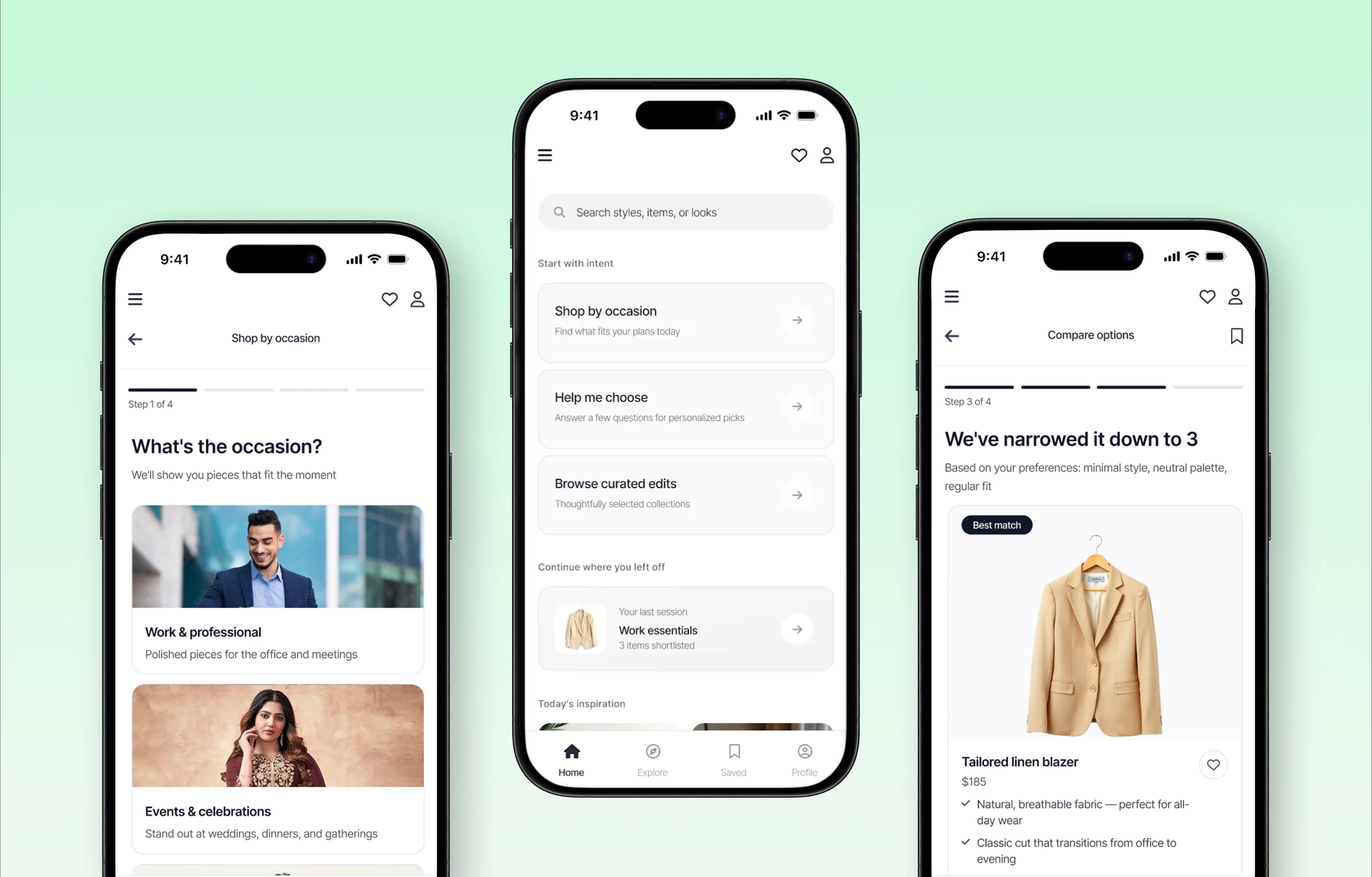
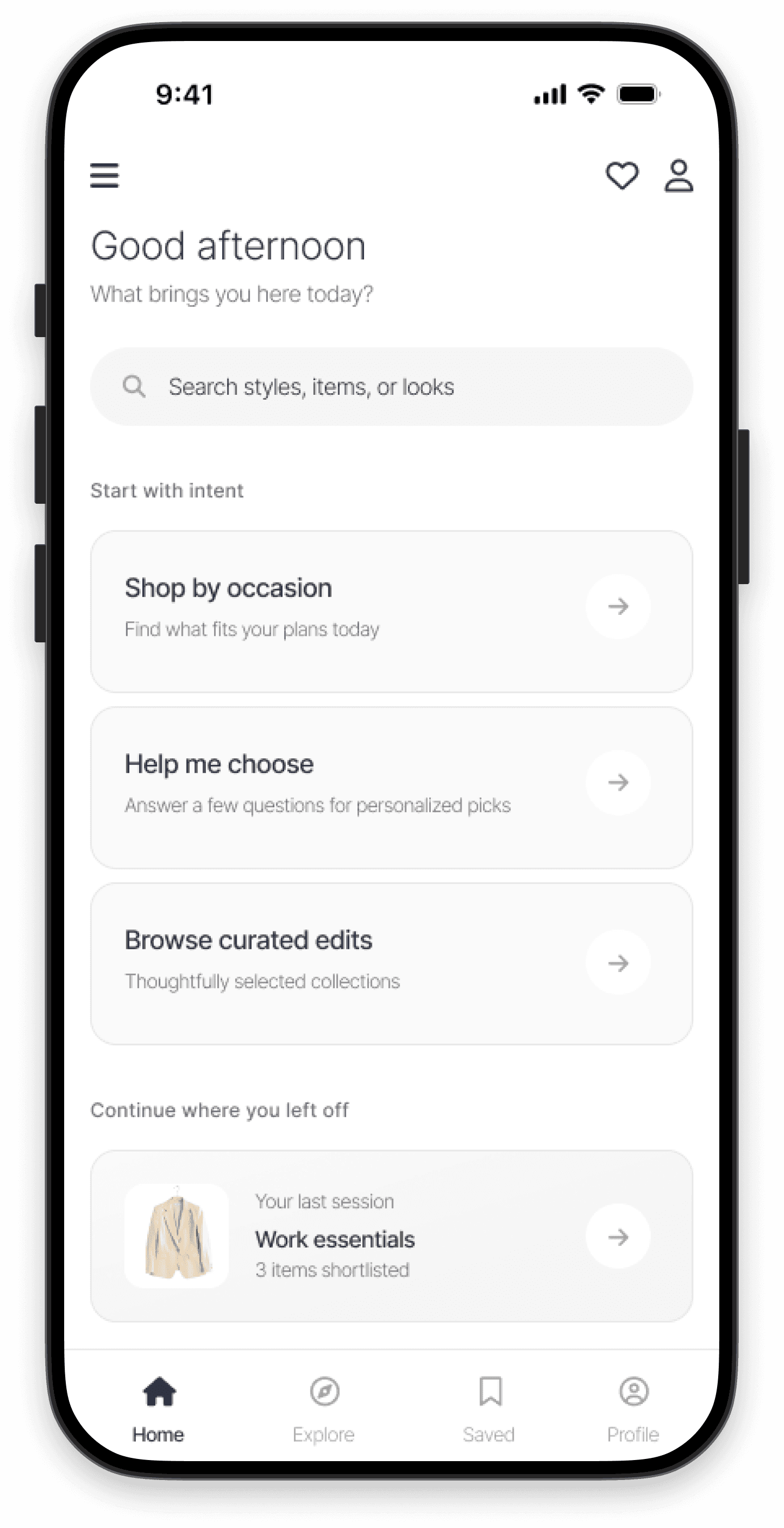
I established intent before exposing inventory.
I replaced the traditional product feed with intent-based prompts such as Shop by occasion and Help me choose. My goal was to signal support rather than pressure, and to prevent users from being overwhelmed before they had clarified what they wanted.
Why I did this
Prevented filter overload
To set a calm, supportive tone
To reframe discovery as a guided experience
OCCASION-LED SELECTION
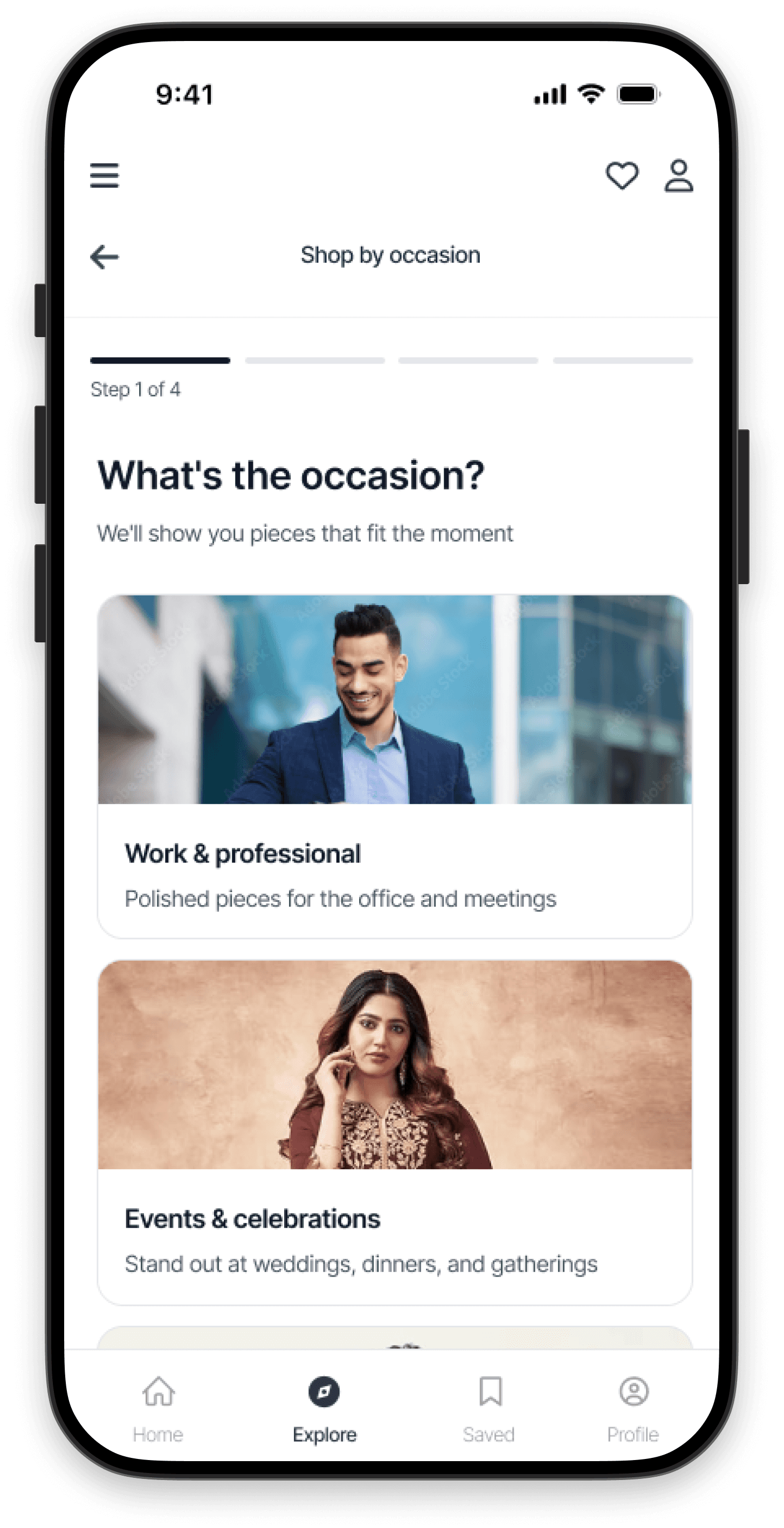
I helped users externalize intent using familiar, real-world contexts.
Rather than relying on categories or filters, I introduced occasion-based selection. Choosing contexts like work, events, or casual use allowed users to move forward without needing to understand the underlying catalog structure.
Why I chose this approach
Occasions align with how people think, not how inventory is organized
It removes taxonomy friction
It keeps choices limited but meaningful
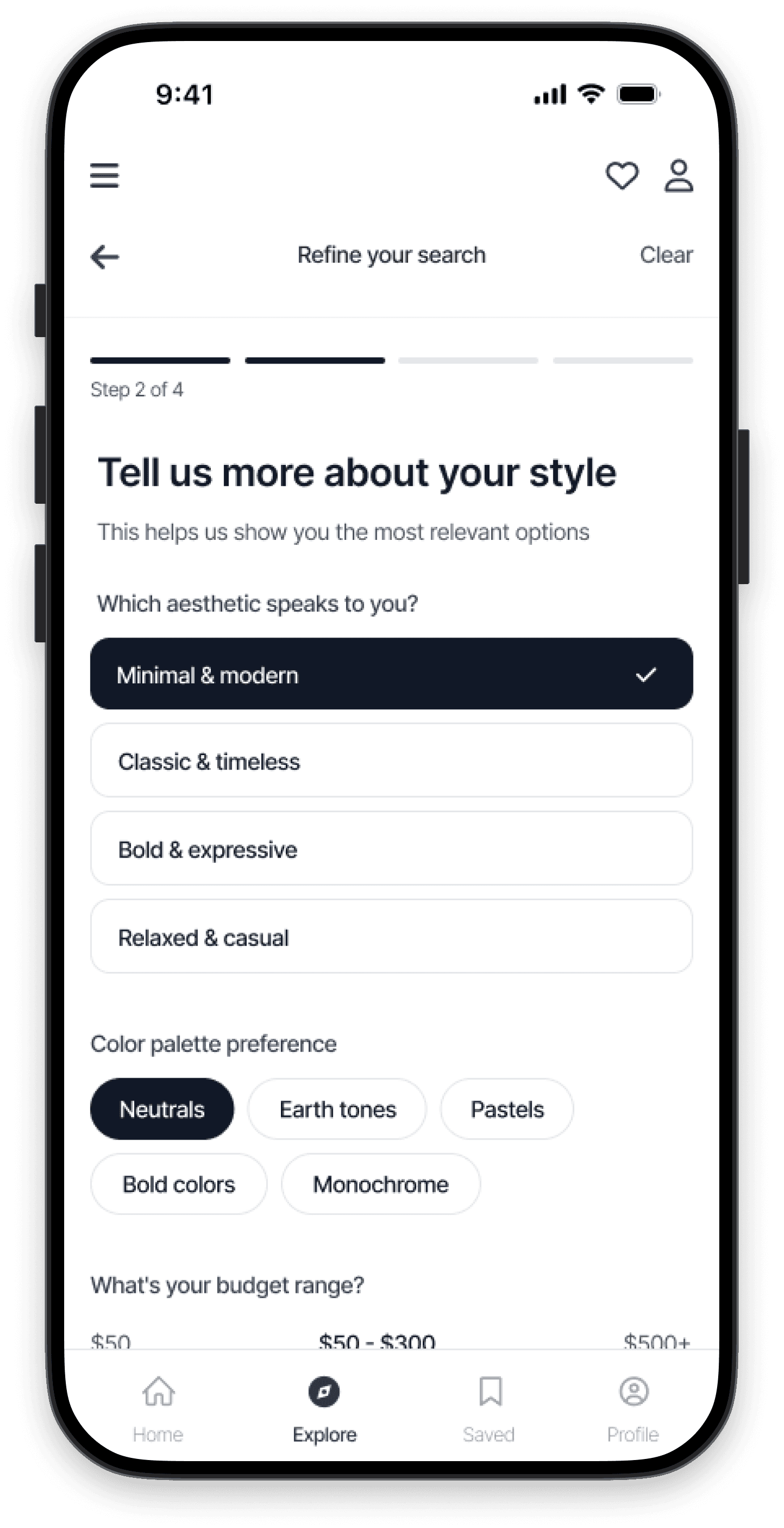
PROGRESSIVE REFINEMENT
I refined intent without overwhelming the user.
I introduced preferences such as style, fit, or budget progressively and conversationally, avoiding dense filter panels. Controls remained lightweight and optional so users could maintain momentum without feeling forced.
Why this mattered
Prevented filter overload
Kept the experience supportive rather than prescriptive
Preserved a sense of control
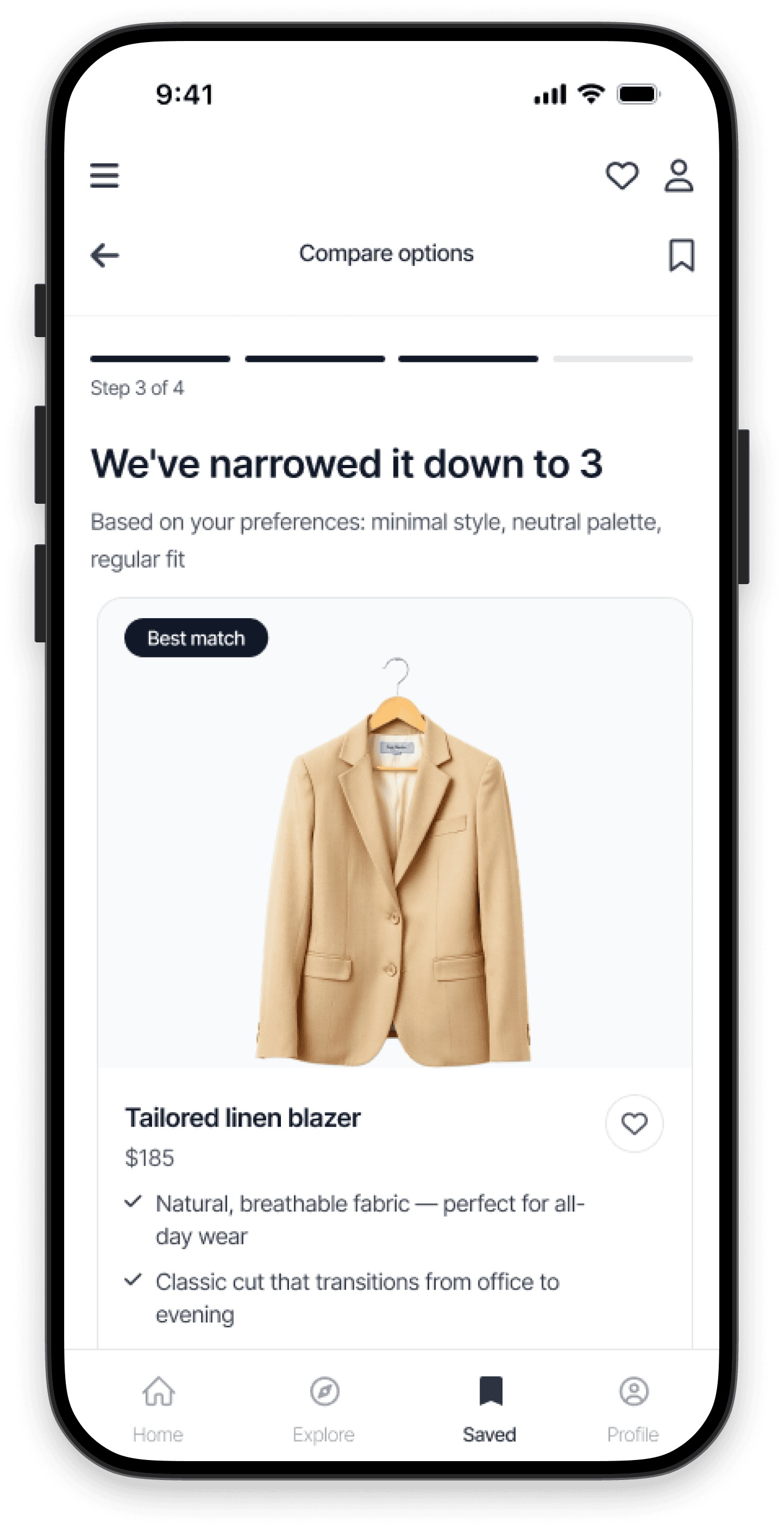
NARROWED DECISION SET
I intentionally reduced options to support confident decisions.
Instead of presenting dozens of results, I narrowed the set to a small number of relevant options and clearly explained why each item was shown. This was a deliberate choice to reduce comparison fatigue and second-guessing.
Why I did this
Fewer options reduce anxiety
Context builds trust in the system
Confidence matters more than completeness
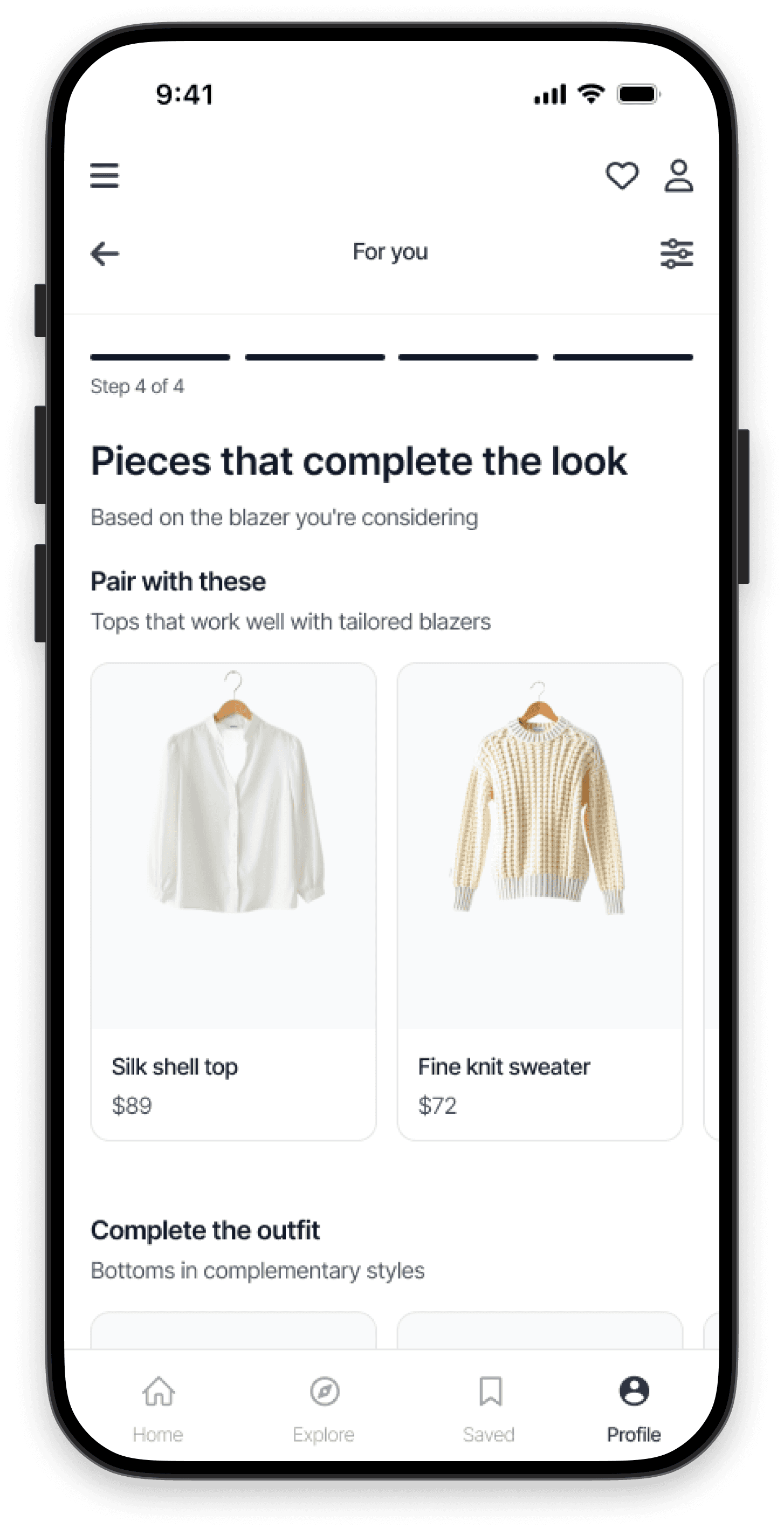
CONTEXTUAL COMPLETION
I supported confidence after a decision was made.
Rather than reopening the full catalog, I used contextual recommendations to help users complete the look, reinforcing their decision instead of restarting the choice process.
WHAT DIDN’T WORK
I learned that more guidance isn’t always better.
OUTCOME
The guided experience made decisions feel clearer and less mentally taxing.
The Solution: Intent-Driven Discovery
A deliberate sequence designed to simplify the path to "yes."
Instead of exposing the full catalog immediately, the experience follows a sequence to reduce early cognitive load while preserving freedom of choice.
REFLECTIONS
This work reinforced that designing for decision-making requires judgement, not just structure.
Reducing choice doesn’t mean reducing freedom. By focusing on intent, pacing, and clarity, I learned how experience design can help users make confident decisions without relying on urgency or persuasion.
If I extended this further, I would explore how this intent-led model adapts across different categories and repeat usage scenarios.