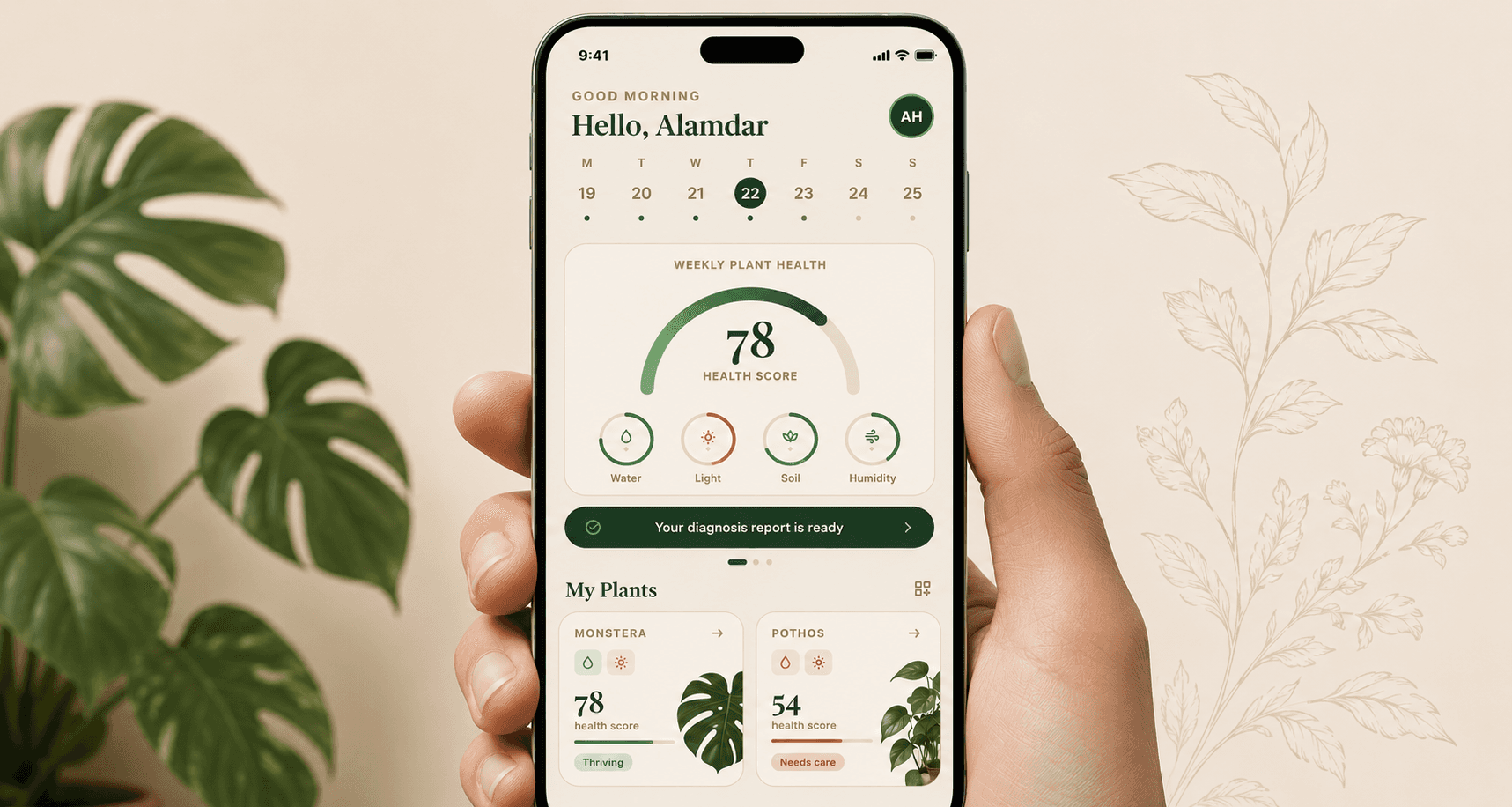
I designed Leafy to give plant owners one clear answer when something goes wrong, not ten conflicting opinions, not a generic care card, but an actual diagnosis.
Leafy is a plant diagnostic platform that turns a yellowing leaf into a clear recovery plan. No guesswork. No jargon. Just a calm answer and a next step.
ROLE
Web Design | Visual Design | UI/UX | Development
TYPE
Consumer App | Plant Care | AI
TIMELINE
10 weeks
TOOLS
Figma | Flutter | Lottie | Figma Make | AE
GENERAL INFO
About Leafy
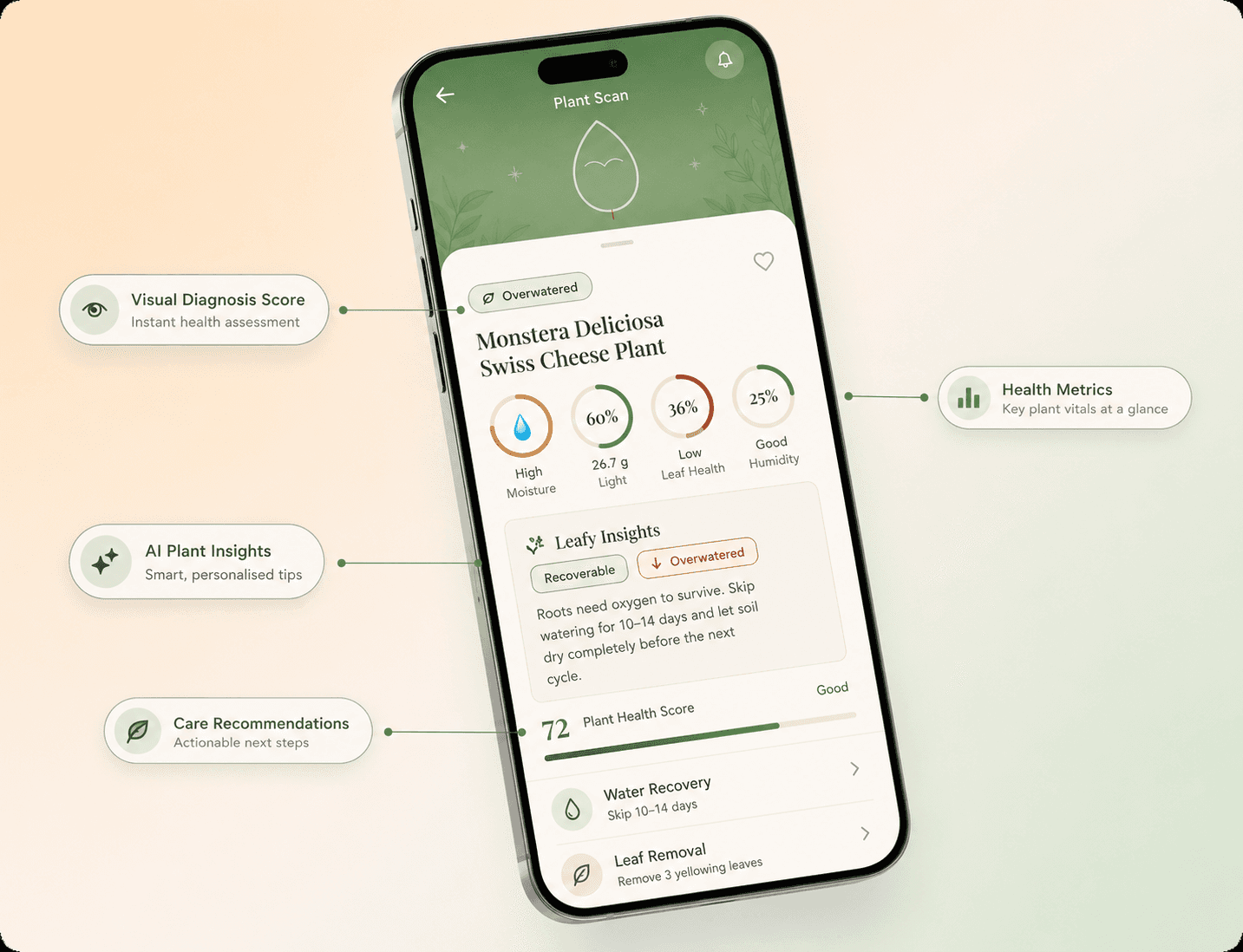
Leafy is a houseplant diagnostic platform designed to take the anxiety out of plant care. Instead of telling users what their plant is, Leafy tells them what is wrong with it and exactly what to do next. It combines AI-powered visual diagnosis with a conversational care assistant, built around a warm, botanical design language that feels calm rather than clinical.
DESIGN PROCESS
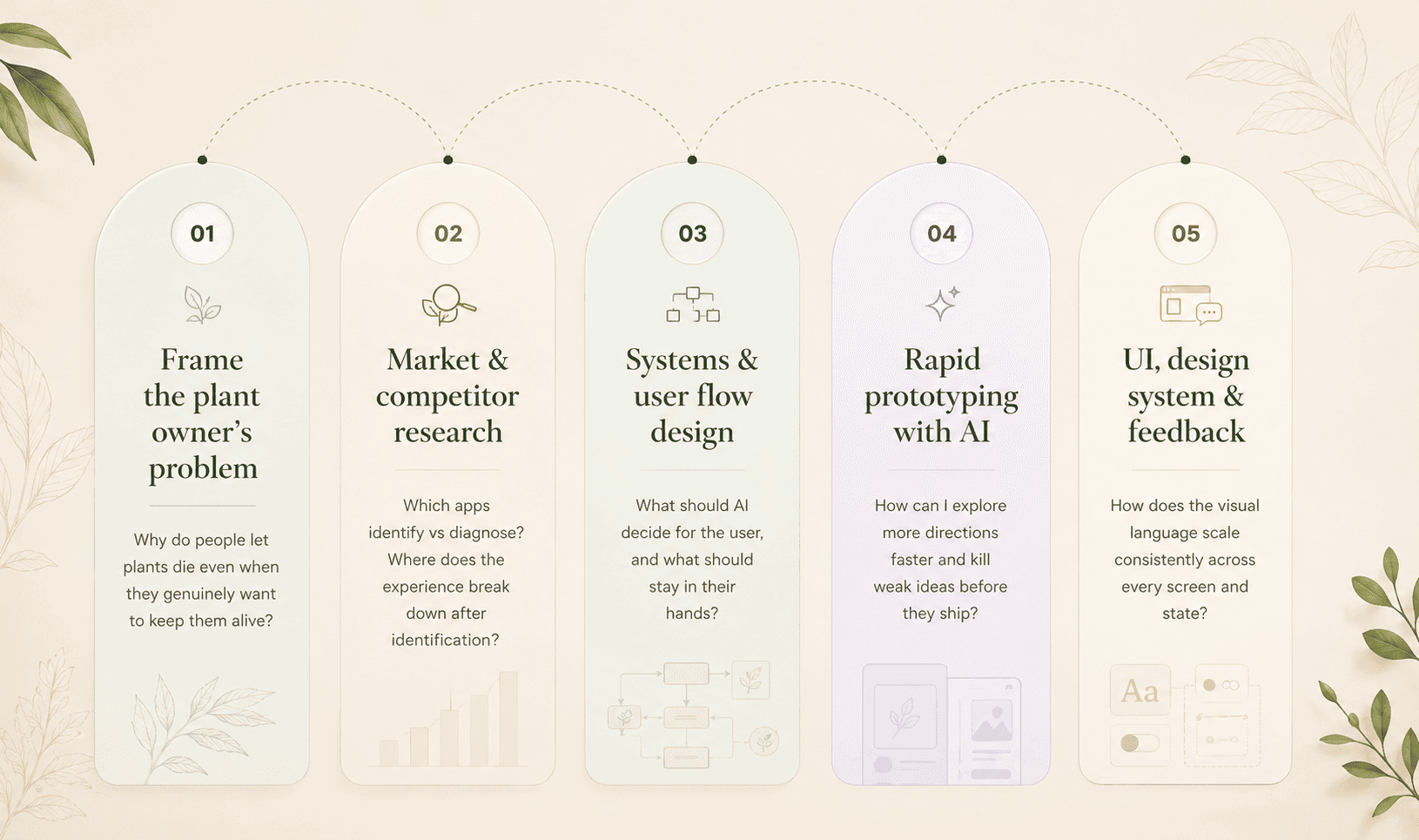
Founder-led, decision-driven, validated early.
Founder-led process focused on clarity, restraint, and long-term behavior change.
THE PROBLEM
The gap between knowing and understanding
Plant care is not short on information. Between Reddit threads, YouTube tutorials, and care apps, there is more advice available than most people could ever read. And yet plants still die. Owners still panic. And the same yellowing leaf still sends someone to Google at midnight, sifting through contradictory answers that leave them more confused than when they started.
The problem is not a lack of information. It is a lack of clear, contextual diagnosis.

BUSINESS GOAL
Design a plant care product people trust when it matters most.
Most plant apps optimise for discovery: identifying plants, building collections, browsing species. The goal with Leafy was different. Build a product that people reach for the moment they notice something is wrong with their plant, and leave feeling like they know exactly what to do.
USER PROBLEM
Plant care feels like guesswork, not guidance.
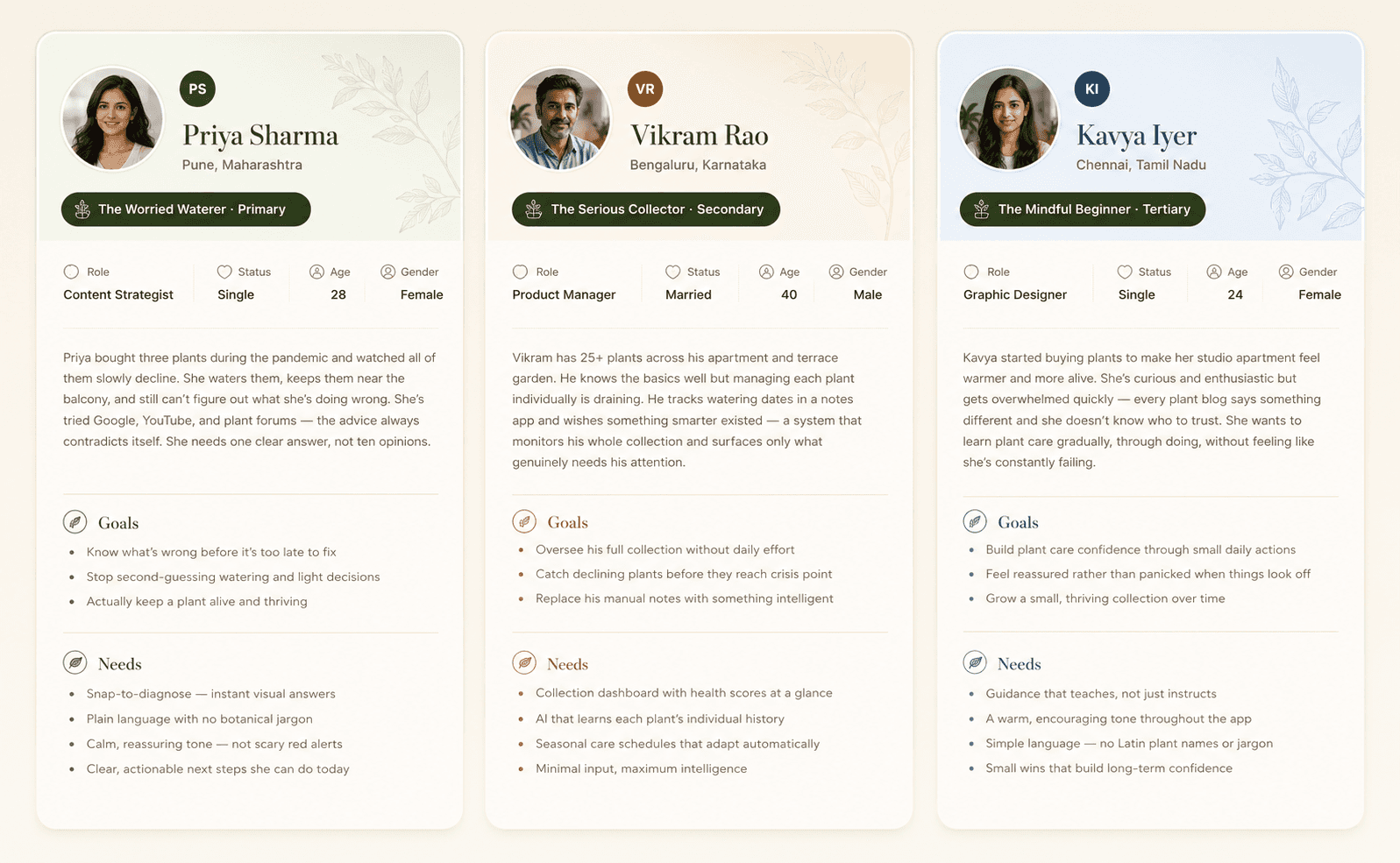
Plant owners genuinely want to keep their plants alive, but when something goes wrong they have nowhere trustworthy to turn. Existing apps tell them what the plant is, not what is wrong with it. Generic care guides cover the average plant, not their specific one in their specific environment. Every decision feels uncertain.
COMPETITIVE ANALYSIS
Competitive Landscape and Behavioural Insights
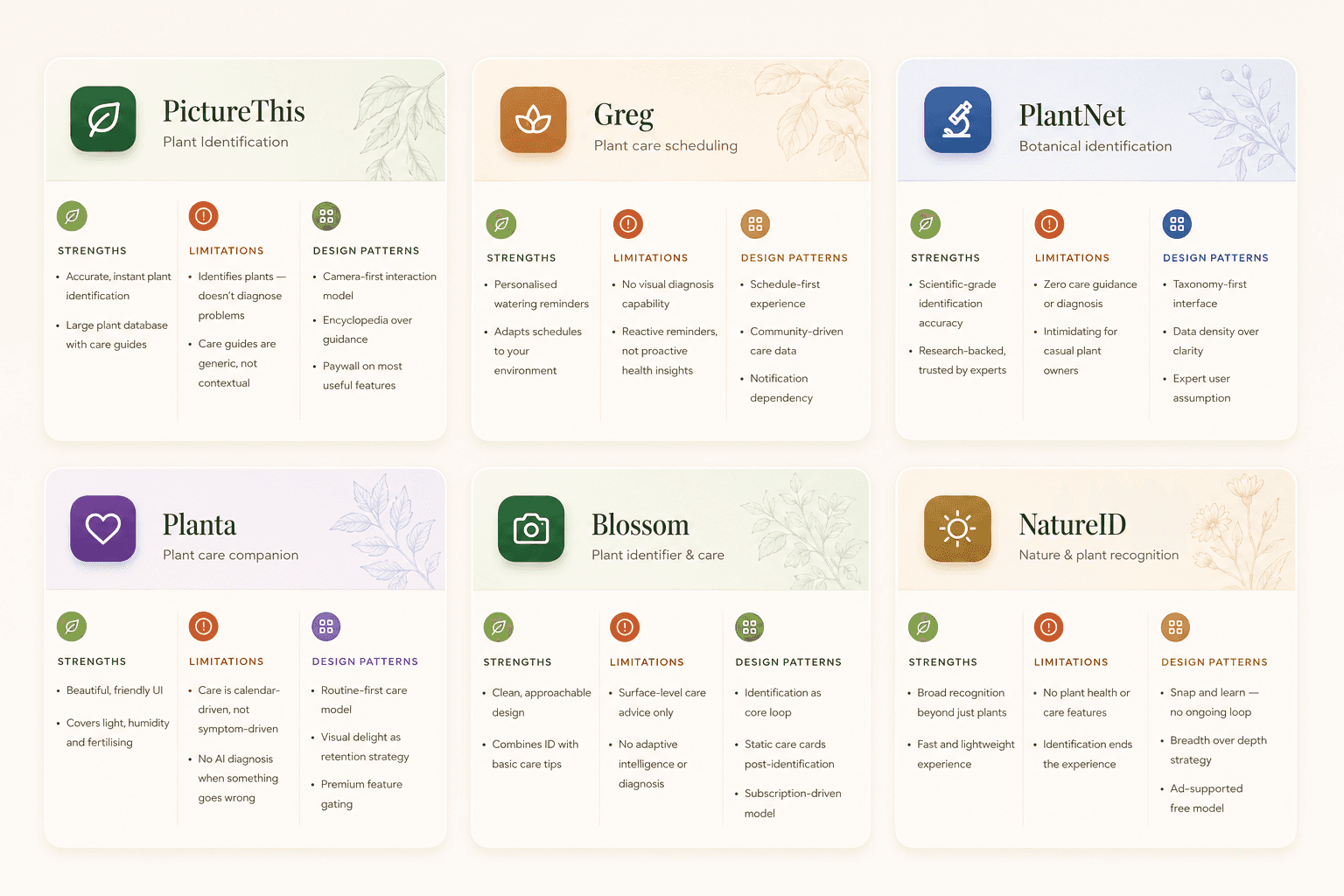
To understand where Leafy should exist, I studied leading plant identification, care scheduling, and diagnostic apps, focusing not on features but on how their product philosophies shape user behaviour over time.
The goal was to identify what supports long-term plant care habits and what silently creates confusion, abandonment, or over-reliance on generic advice.
DESIGN PHASE
From insight to interface
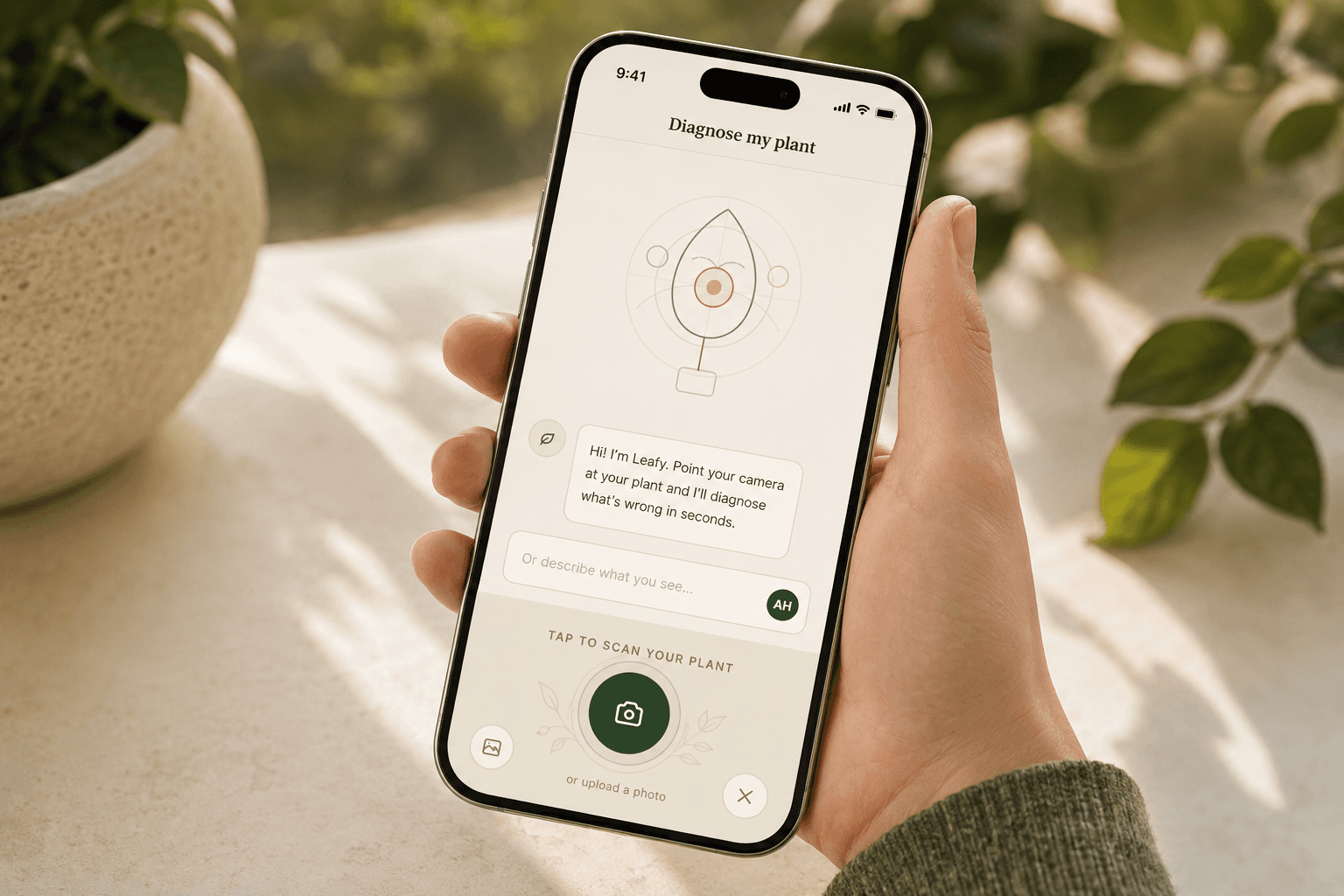
With the problem framed and competitor analysis complete, the focus shifted from analysis to making. I started exploring early interface concepts for Leafy's core diagnostic experience.
Before diving into flows and systems, I explored the experience through early visual concepts, using screens to validate tone, hierarchy, and the emotional clarity of the AI interaction. The question at this stage was simple: does this feel calm, or does it feel clinical?
WIREFRAMES
Designing the structure before the surface
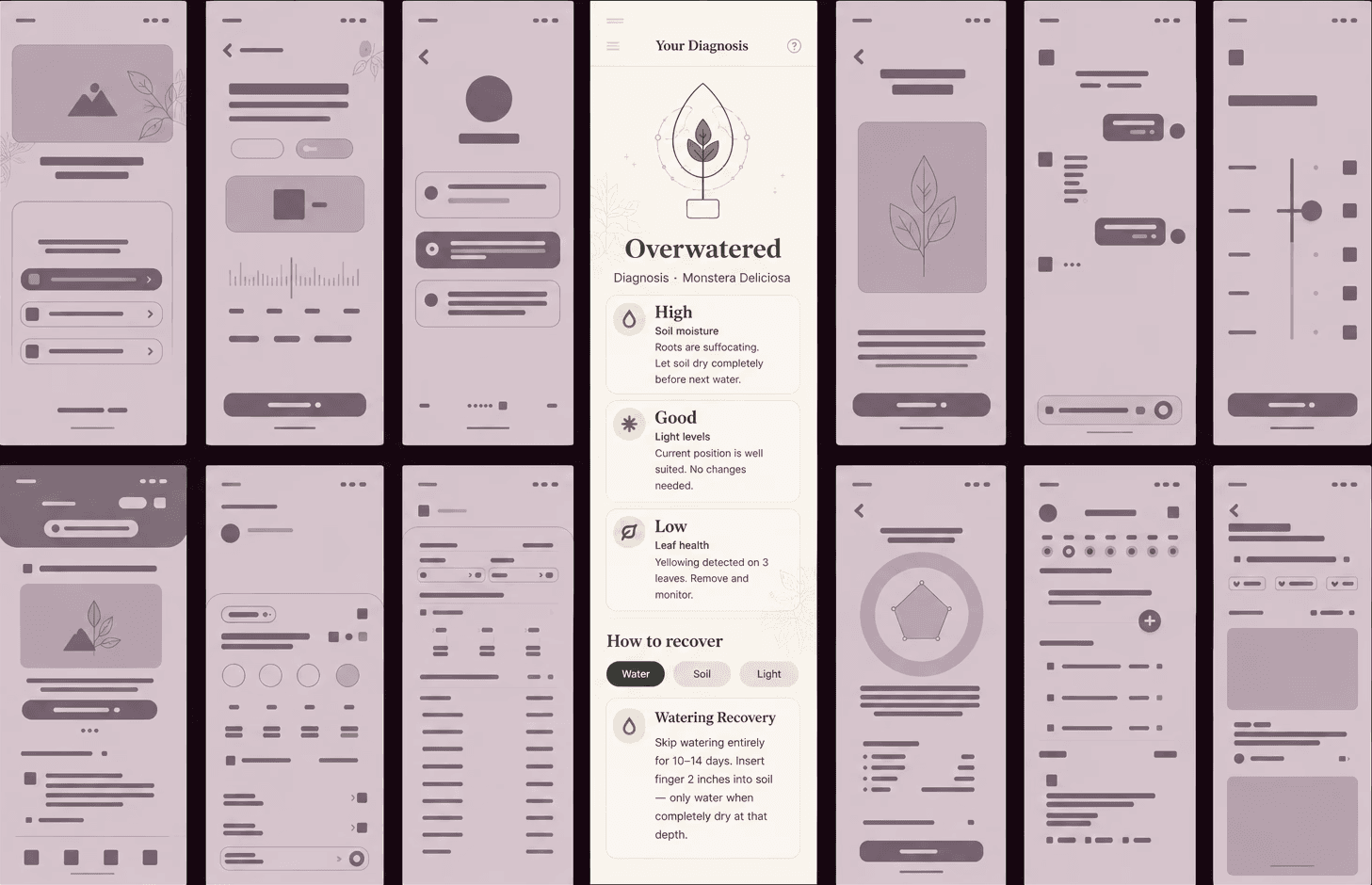
Before moving into visual design, I explored low-fidelity wireframes to validate structure, hierarchy, and cognitive load across every key screen.
The goal at this stage was not aesthetics or completeness. It was to ensure each screen answered a single user question and reduced the need for interpretation. A plant owner in a moment of worry should never have to figure out what to do next. The interface should already know.
These wireframes helped pressure-test the diagnostic flow and remove every unnecessary decision from the user's path.
TYPOGRAPHY AND COLOUR
Typography
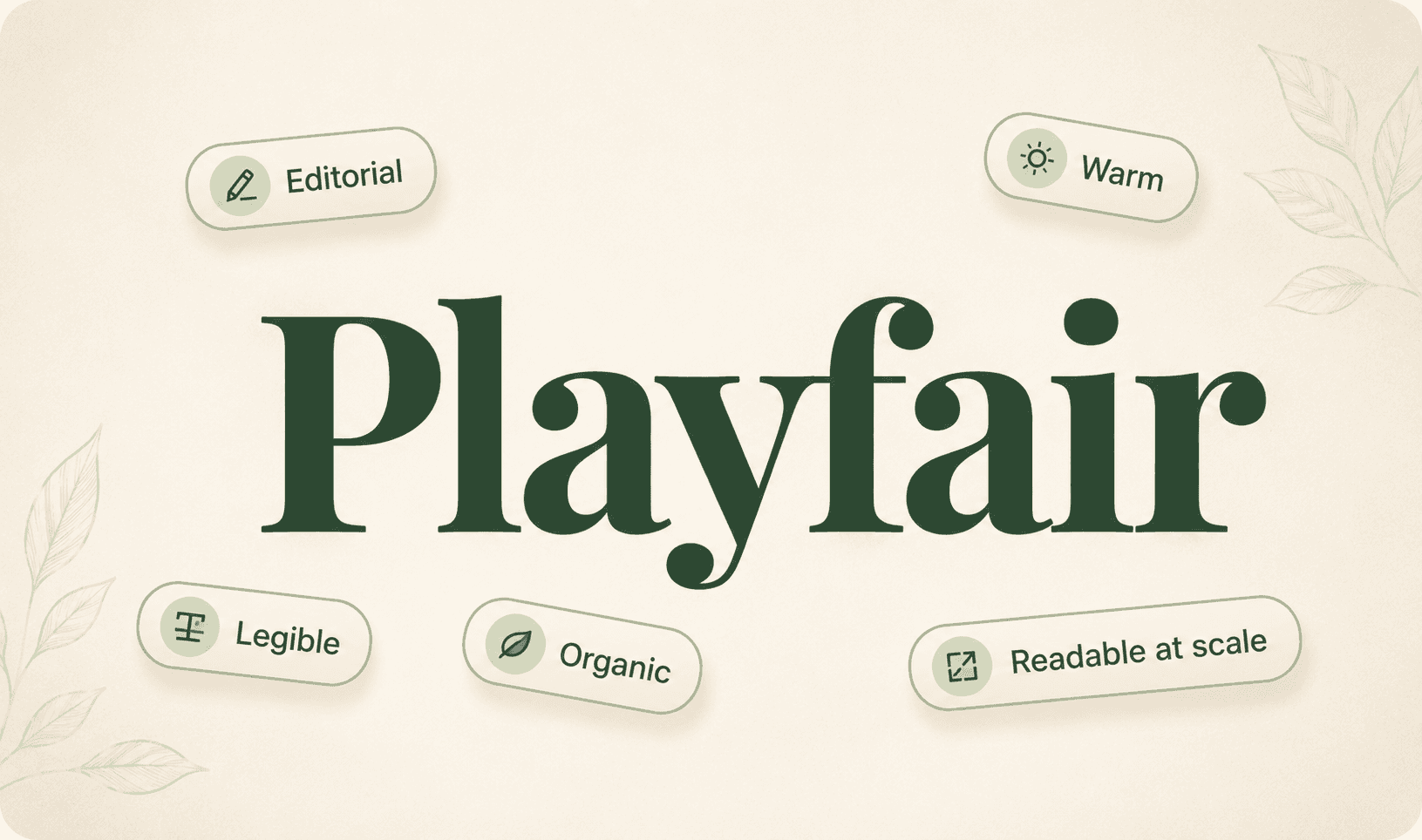
Leafy's visual system was designed to feel warm, botanical, and editorially rich without ever feeling clinical or sterile. Every typographic decision supports calm readability and emotional warmth over visual noise.
High legibility on small mobile screens in any light.
Serif warmth that feels editorial, not technical.
Organic tone that avoids clinical or scientific intimidation.
Playfair Display is the brand typeface. Chosen because it carries the warmth and editorial quality of a high-end plant shop or nature magazine. When paired with Inter for all UI text, the combination reads as knowledgeable and calm rather than cold or corporate.
Color System
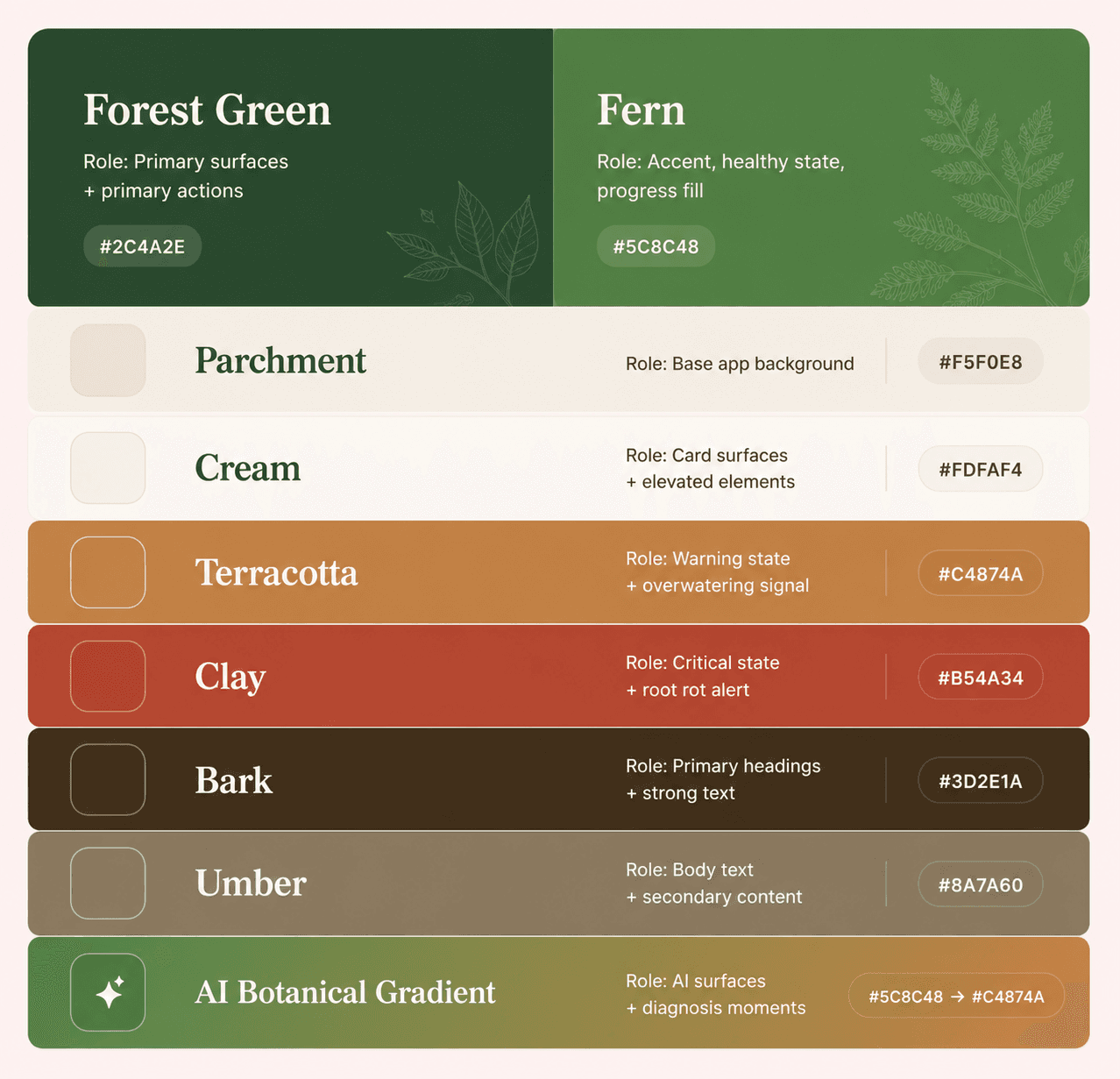
Leafy's colour system was designed to feel warm, alive, and instantly readable. Every colour carries semantic meaning, covering the full range from the calm of a thriving plant to the urgency of a struggling one.
AI LEVERAGE
Designing with AI as a creative partner
AI was not used to replace design thinking in Leafy. It was used to remove friction, compress timelines, and increase the quality of decisions across the product lifecycle. I treated AI as a co-designer and force multiplier, not a shortcut.
AI-Assisted Research and Pattern Discovery
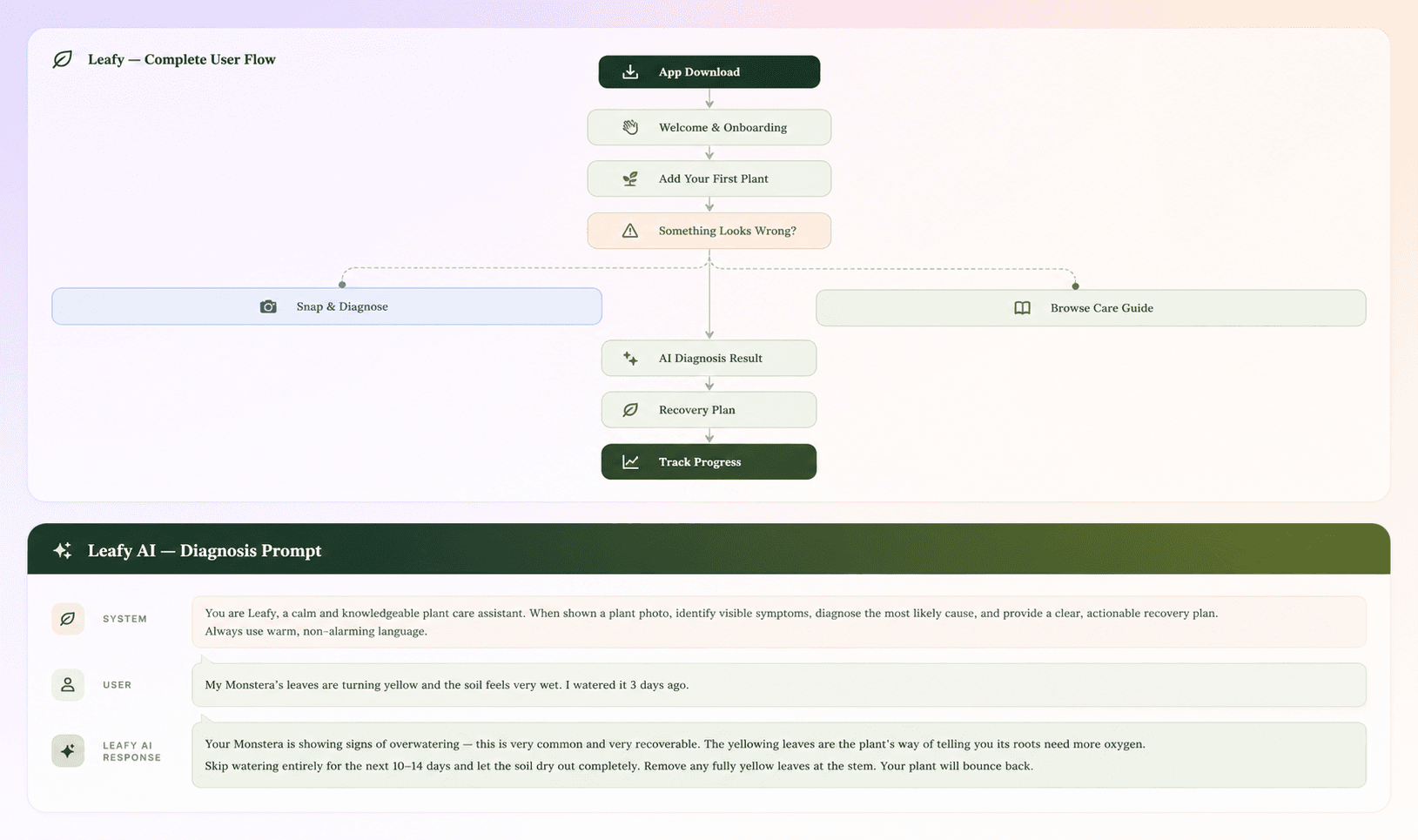
AI was used to accelerate early-stage research by synthesising large amounts of plant care, UX, and behavioural data, identifying what makes plant owners abandon care apps and what drives long-term engagement.
How AI helped:
Analysed plant identification, care scheduling, and diagnostic apps across the market.
Identified recurring UX failure points: identification without guidance, generic care cards, and anxiety-inducing alerts.
Compared best practices across wellness, health, and nature app categories.
Consistent illustration generating AI app
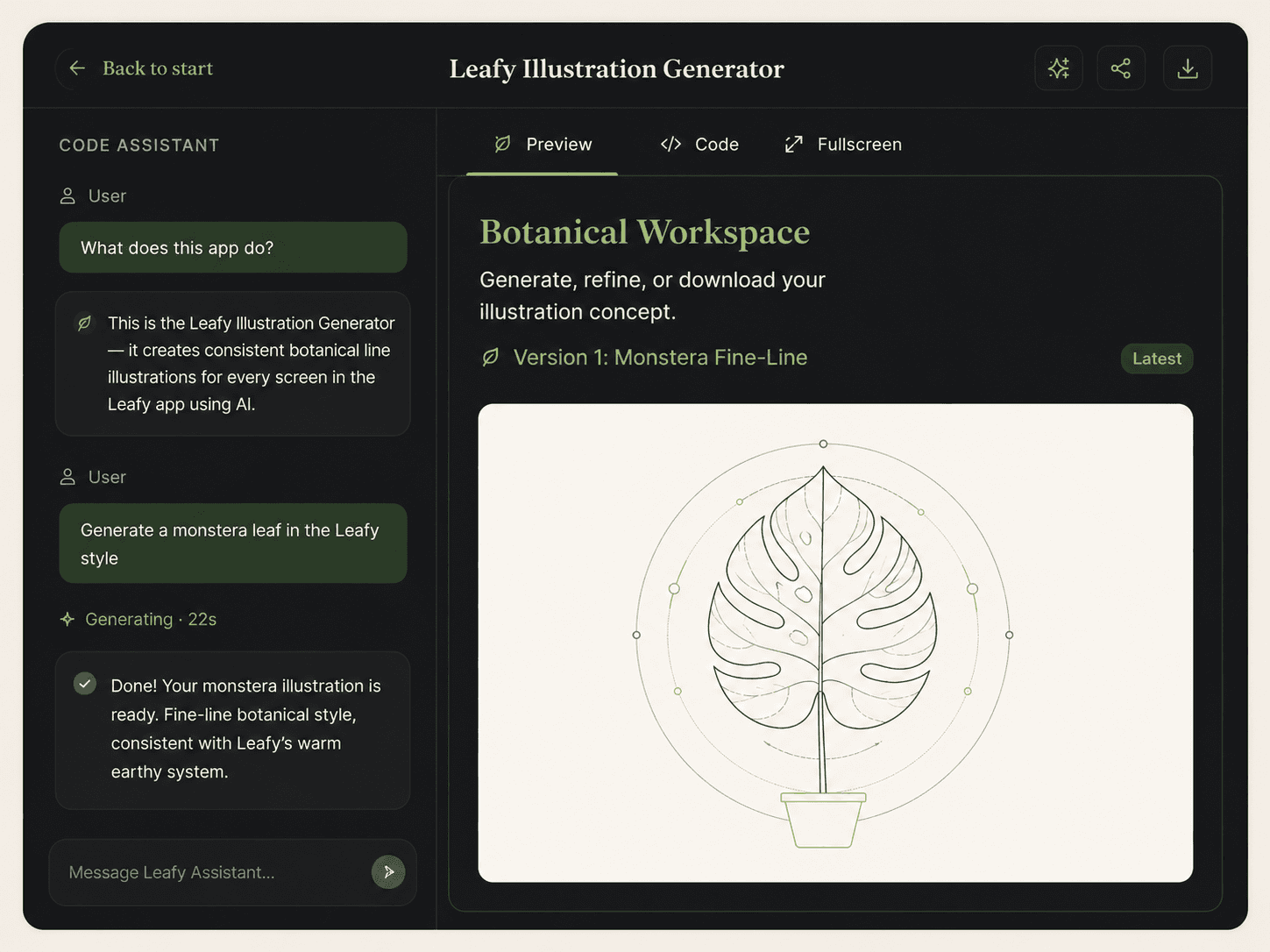
Instead of sourcing or manually creating botanical illustrations for every screen, I built a custom illustration generator using AI, trained on Leafy's warm earthy visual language to produce consistent fine-line botanical art on demand.
How AI helped:
Created a prompt-driven illustration system tuned to Leafy's botanical aesthetic.
Reduced dependency on manual illustration work across 12 screens.
Generated consistent fine-line botanical art across all screens and flows.
Maintained visual coherence with the same stroke weight, palette, and organic geometry throughout.
Rapid Prototyping with Figma Make
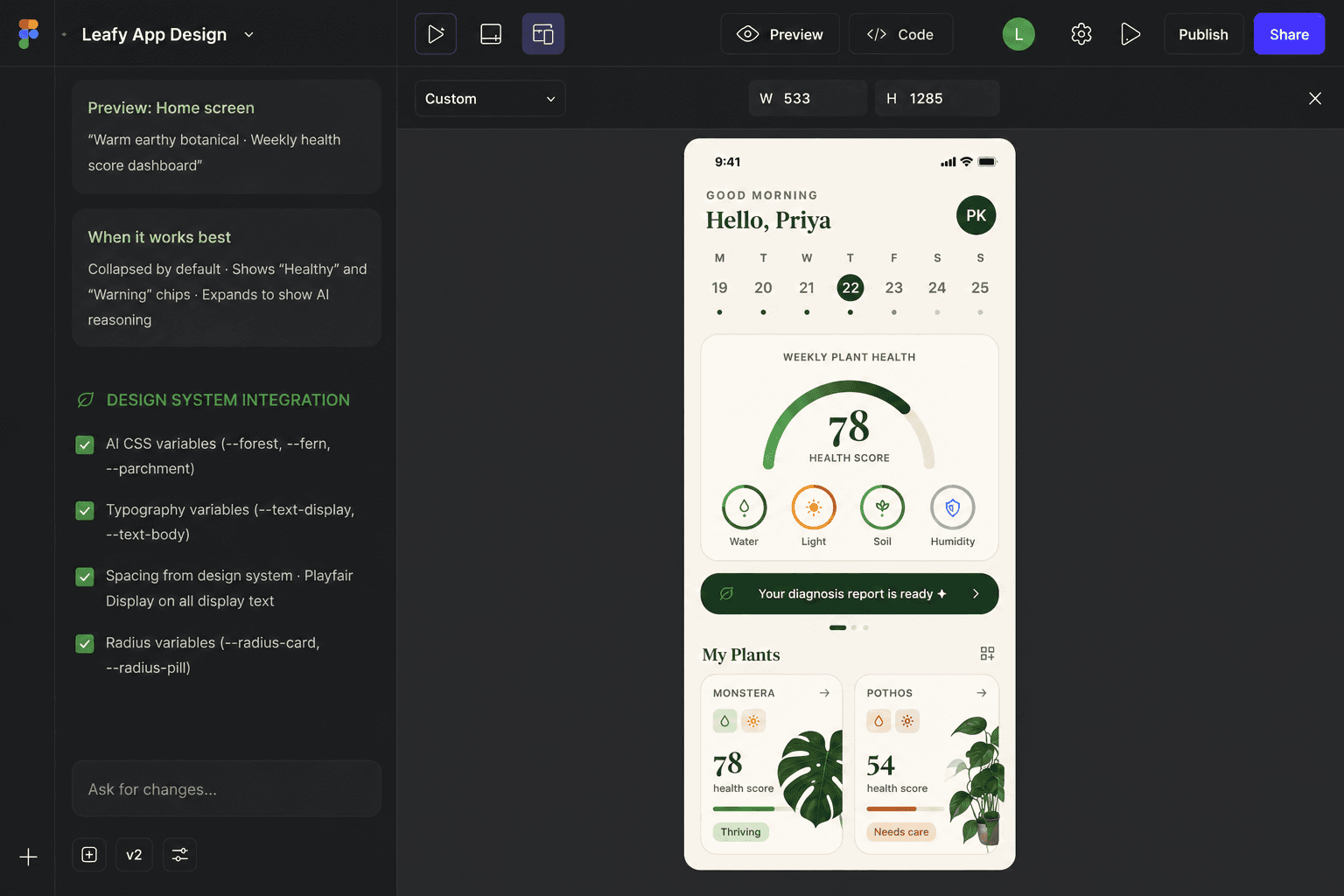
AI was heavily used during prototyping to visualise the full Leafy product experience early, not just individual screens but complete end-to-end diagnostic journeys before a single component was finalised.
How AI helped:
Quickly generated interactive prototypes to test the snap-to-diagnose flow end to end.
Explored multiple layout directions and care report structures in parallel.
Visualised complete user journeys early and gathered feedback before visual polish.
Design system variables were wired in from day one, so there was no visual drift across screens.
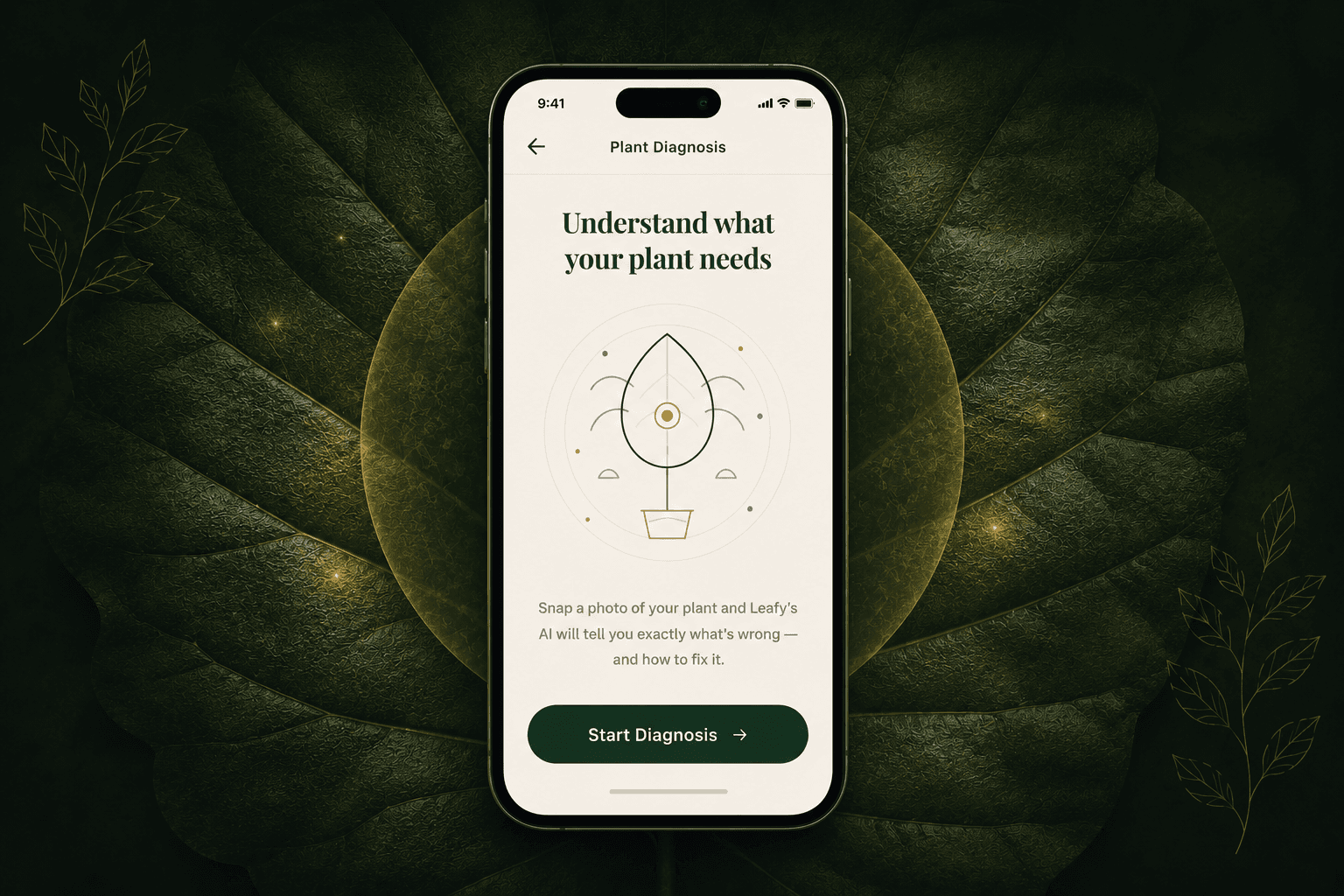
ONBOARDING
Discovering your plant's unique care blueprint
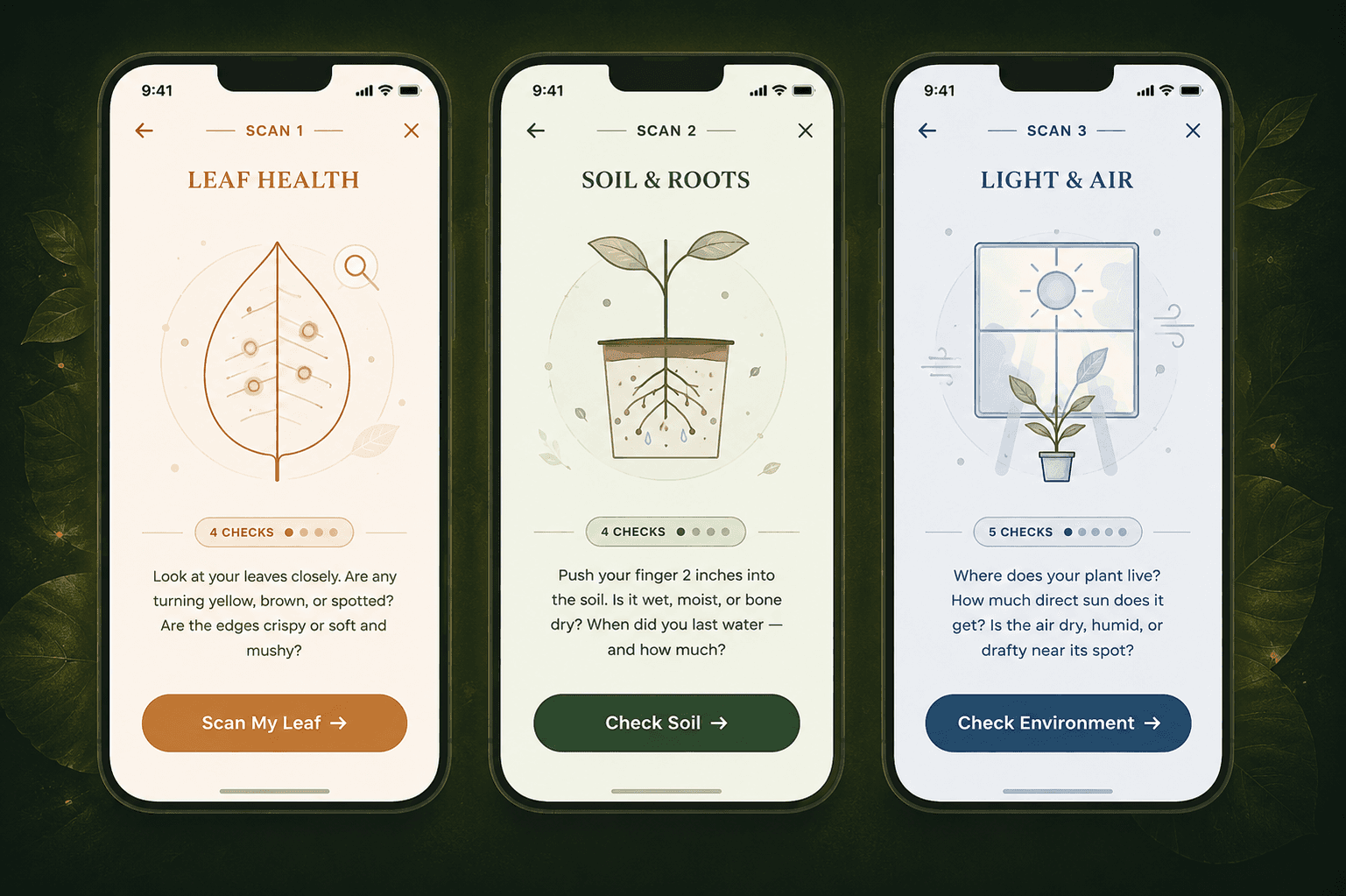
Leafy's diagnosis experience is not a simple identification tool or a generic care guide. It is a contextual diagnostic ritual designed to understand how your specific plant is responding to its environment, its light, its water, and its soil. Instead of making users learn botany, Leafy translates everything into immediate, practical care guidance.
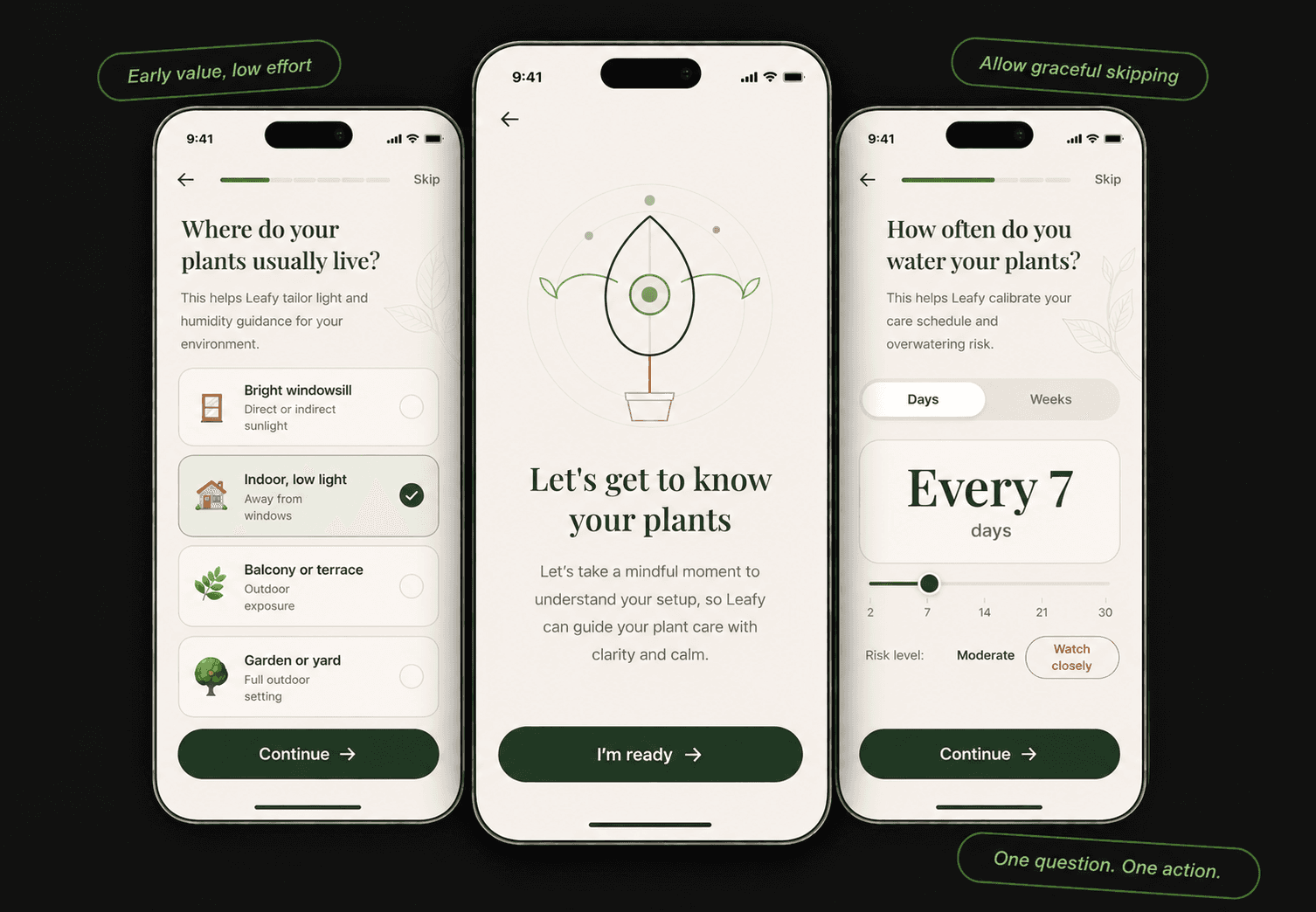
ONBOARDING
Earn trust before asking for effort
Leafy's onboarding is designed to feel like a gentle introduction, not a questionnaire. The goal is not data collection. It is to quickly understand the plant owner's context so Leafy can reduce guesswork from day one.
COMPONENTS
Designing components that bring the product to life
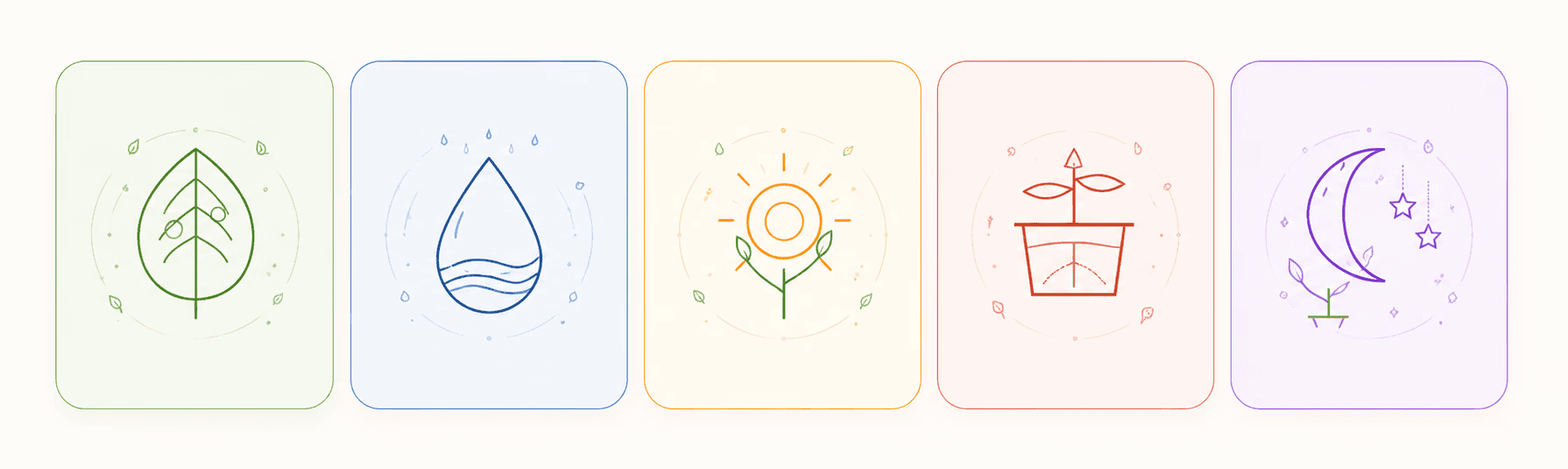
Leafy's interface is built from a diverse set of purpose-driven components designed to make the product feel alive. Rather than relying on generic cards and charts, I created a library of expressive components that work together to communicate diagnosis, progress, and care without overwhelming the user.

DESIGN SYSTEM
Designing for consistency and scale
Leafy's design system was built to ensure every screen feels cohesive, every component is reusable, and the entire product can scale without breaking. A system that adapts with the product rather than against it.
The system covers typeface tokens, colour scales across all four palette groups, spacing, border radius, icon sizes in light and dark variants, status chips for every plant state, and care insight components that appear throughout the diagnostic flow.

RESULTS
500+ Plants Diagnosed
Validated real diagnostic demand. Users actively scanned plants within the first session, confirming the core problem is genuine and the solution resonates immediately.
Core Problem Validated
Early usage and feedback confirmed a key insight. Plant owners respond far better to clear diagnosis and actionable next steps than to generic care calendars or identification alone.
The goal of Leafy's was not scale, but signal. This validated the need for diagnosis over identification, proved the effectiveness of calm AI guidance over clinical alerts, and confirmed the viability of a warm, botanical design language in a space dominated by sterile utility apps. Most importantly, it transformed assumptions into real user learning, creating a strong foundation for iteration, refinement, and future growth.

RETROSPECTIVE
Plants do not need more apps. They need better answers.
Every piece of user feedback pointed to the same frustration: people are not short on information about plant care. They are short on clear, trustworthy answers at the moment they need them most. When Leafy gave them one specific diagnosis with one specific next step, the relief was immediate. That clarity is the product.
Not everything you design needs to ship.
Leafy started with ambitions to include social plant journaling, a marketplace for rare plants, and a community Q&A feature. Early testing revealed that none of those things mattered to someone standing over a yellowing Monstera at 10pm wondering what they did wrong. Shipping fast, testing honestly, and cutting aggressively mattered far more than comprehensive planning.
Systems before screens.
This project reinforced something I will carry into every future project. Starting with user flows rather than individual screens leads to better decisions at every stage. Designing systems rather than isolated moments ensures the product stays coherent as it grows. Prioritising logic and consistency over decoration always serves the user better in the end.
What Leafy taught me
Leafy deepened my product thinking, my AI fluency, and my ability to work at a system level as a solo designer. More than anything, it taught me that great plant care products do not overwhelm users with botanical knowledge. They meet the user in their moment of worry and guide them calmly back to confidence.