How a design memory layer stopped creative teams from losing the thinking behind their work
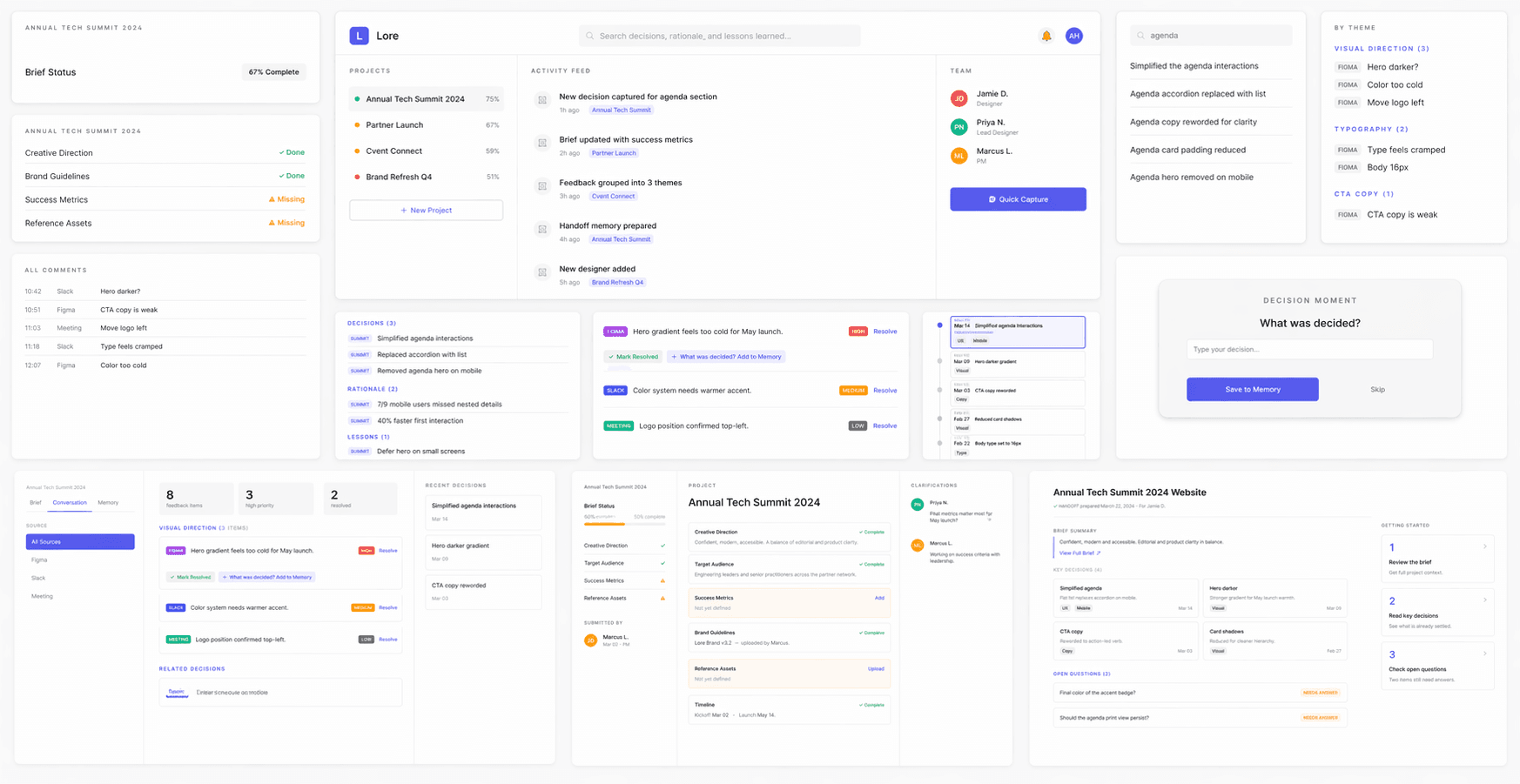
Lore is a workflow and knowledge tool that captures the brief that starts the work, the conversation that shapes it, and the thinking that explains it. So nothing disappears between projects, handoffs, or team changes.
ROLE
Product Designer
TYPE
Self-Initiated Concept
TIMELINE
5 Weeks
PLATFORM
Web Dashboard
THE PROBLEM
The same things kept breaking. Always for the same reason.
The tools creative teams use were never really built for them. Salesforce managed client relationships. Jira tracked sprints. SharePoint stored files. But none of them understood how creative work actually happens. Briefs arrived incomplete. Feedback got lost between tools. Decisions had to be remade because nobody documented why they were made.
01
The Brief Gap
Designers start guessing instead of designing.
02
The Feedback Fragmentation
The intent got lost between tools.
03
The Lost Rationale
Hours spent redoing thinking already done.
04
The Handoff Vacuum
Every handoff started from scratch.
"The problem was never the quality of the work. It was that the thinking behind the work kept disappearing."
EXISTING TOOLS
Every tool we used was built for someone else.
Before designing anything I needed to understand if this was one company's problem or an industry-wide one. So I mapped every tool creative teams actually use and asked one question about each: does it understand how creative work actually flows?
The answer was the same across every tool I looked at.
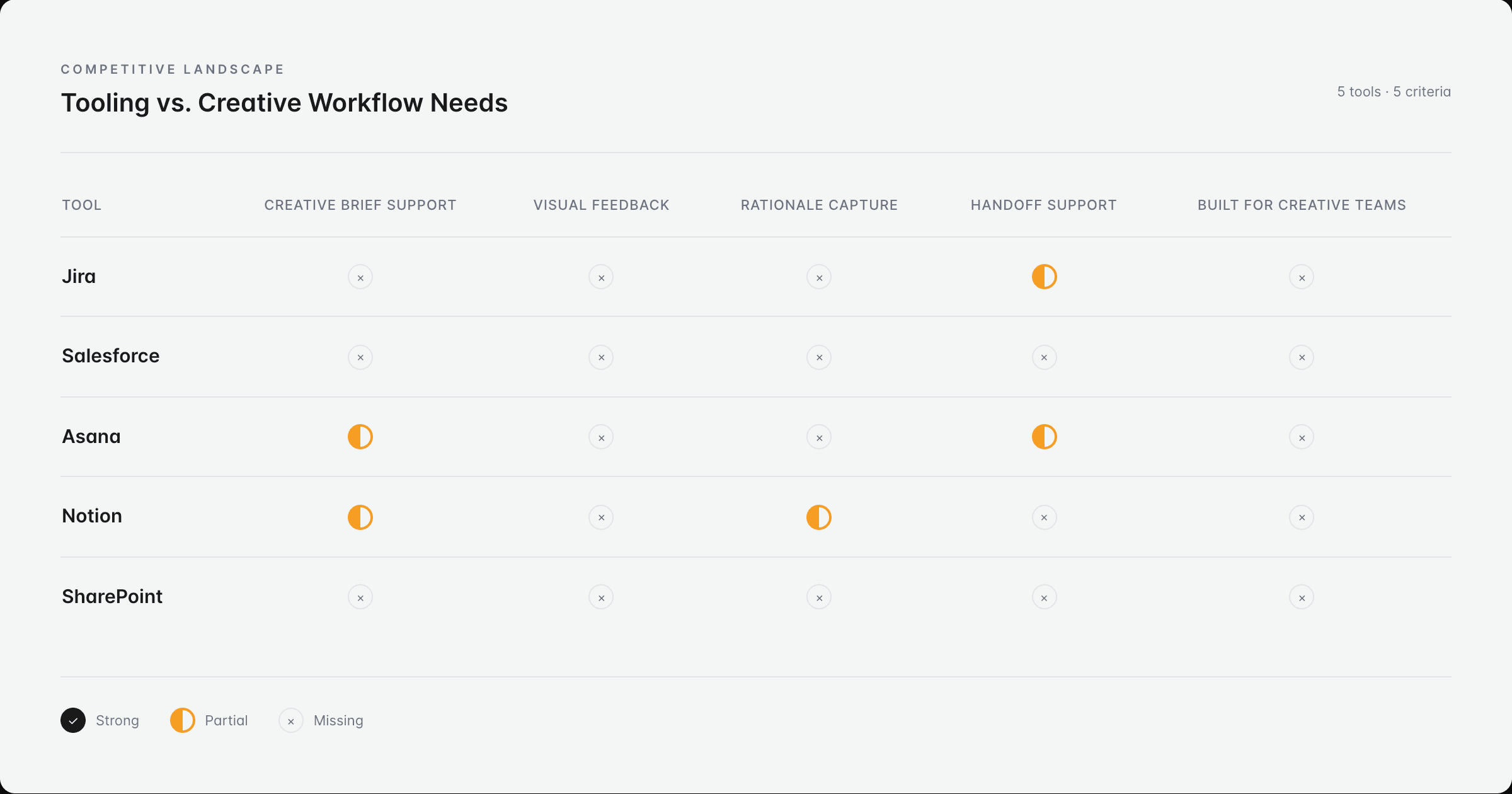
None of these were designed around how creative teams think.
THE INSIGHT
It is not a workflow problem. It is a memory problem.
Looking across all four problems, I kept coming back to the same realization. The tools weren't failing at task management. They were failing at something more fundamental.
Briefs disappear after projects start. Feedback gets buried in Slack after the review. Design rationale lives in someone's head until they leave the team. Handoff documentation exists nowhere because no tool was built to hold it.
Creative teams don't just need better task management. They need a system with memory.
WHAT TOOLS CAPTURE
Tasks
Files
Comments
Time
What teams actually need
Creative briefs
Consolidated feedback
Design rationale
Institutional knowledge
Handoff context
INFORMATION ARCHITECTURE
Three layers. One system.
Before touching any screens I needed to answer a structural question: what does Lore actually hold and how does it connect? Every problem I'd identified pointed to a layer of information that existing tools were missing completely.
Three problems. Three missing layers. One system.
LAYER 02
5 fields
Brief
Creative direction
Target audience
Success metrics
Brand guidelines
Timeline
LAYER 02
4 fields
Conversation
Creative direction
Target audience
Success metrics
Brand guidelines
Timeline
LAYER 02
5 fields
Memory
Creative direction
Target audience
Success metrics
Brand guidelines
Timeline
EARLY EXPLORATIONS
A lot of directions before one that worked.
The hardest design challenge in Lore wasn't the screens. It was figuring out how to make capturing design thinking feel natural rather than like extra work. Designers already have too many things to fill in. Adding another documentation layer would just create another tool nobody uses.
Every exploration started with one constraint: if this adds friction, designers won't use it.
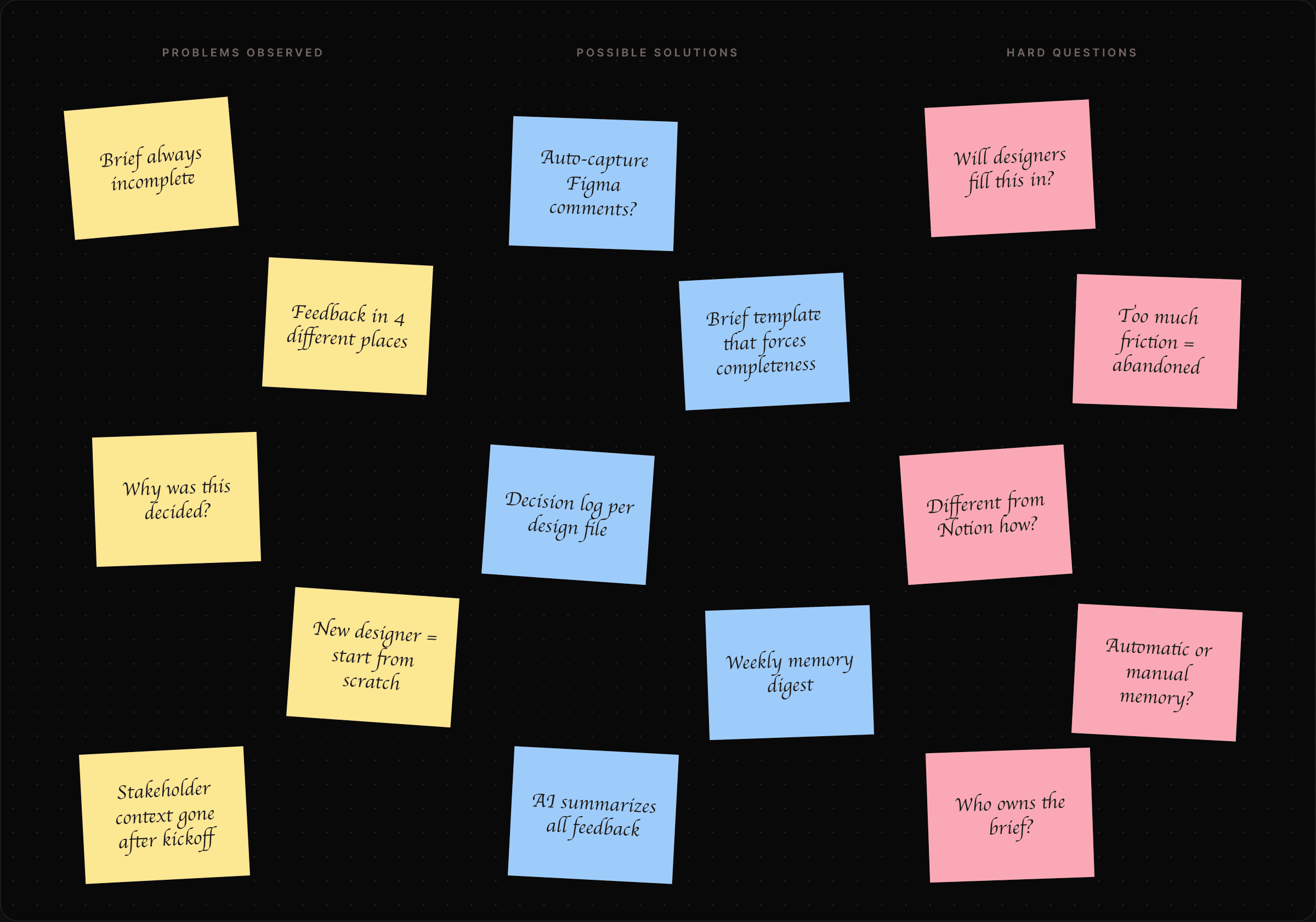
The pink notes shaped every decision that followed.
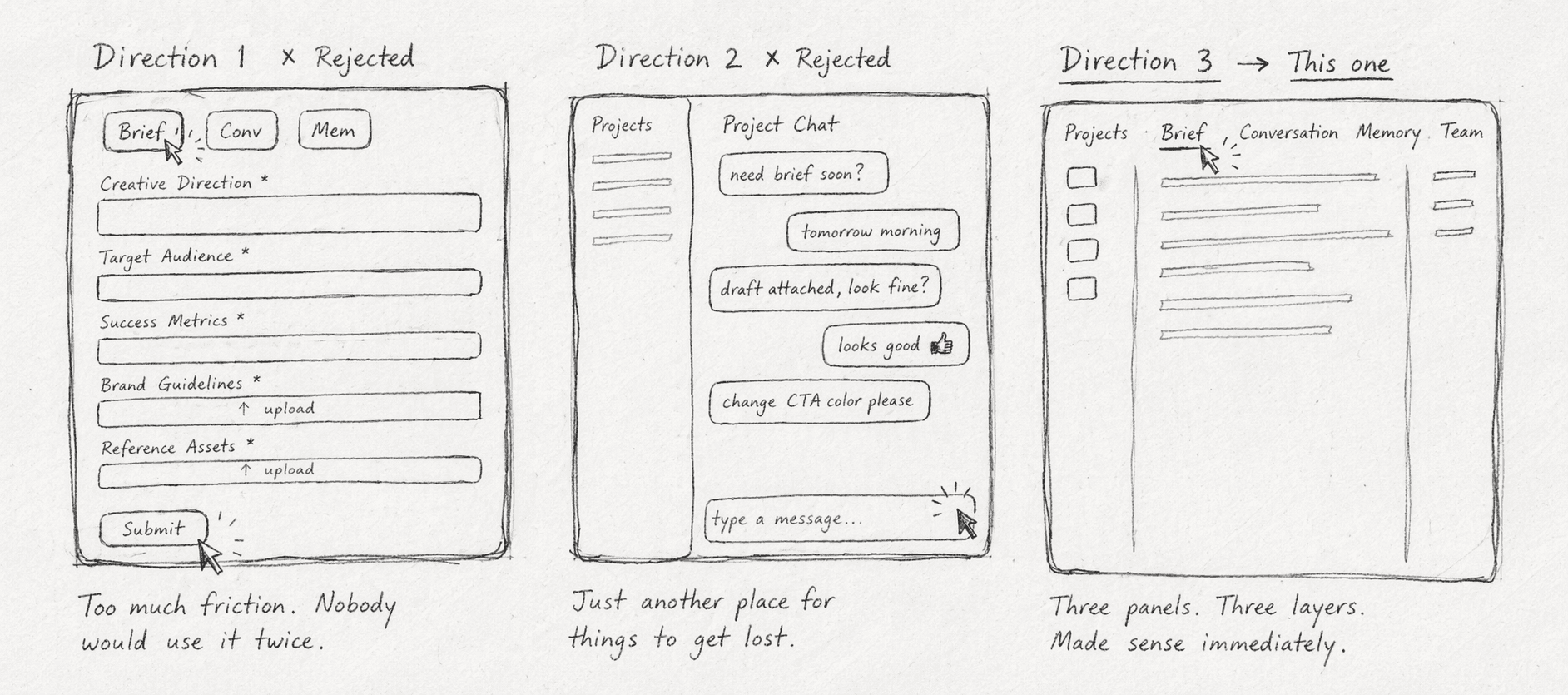
The constraint pointed me toward three fundamentally different structural directions. Each one made sense on paper. Each one failed in a different way, which told me something important about the problem.
I tried three fundamentally different approaches
Each failed in a different way, which told me something.
Then I explored how each feature should work.
Each decision went through multiple rounds. Here are the ones that changed direction.
These are the four decisions that changed direction most significantly, and what I learned from each wrong turn.
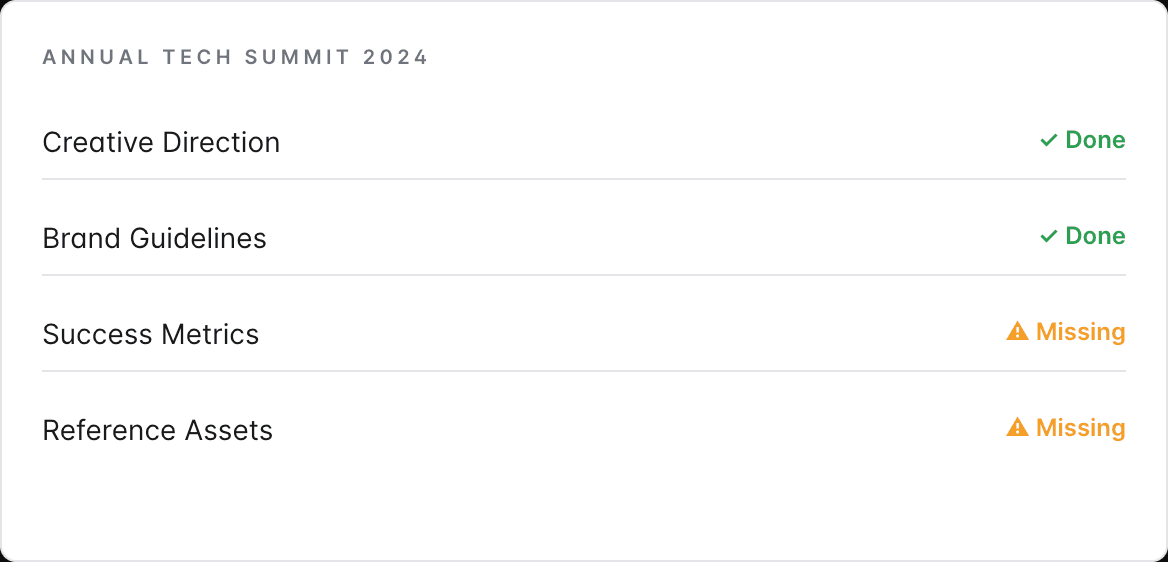
Exploration 01 · Brief Completeness
Version A
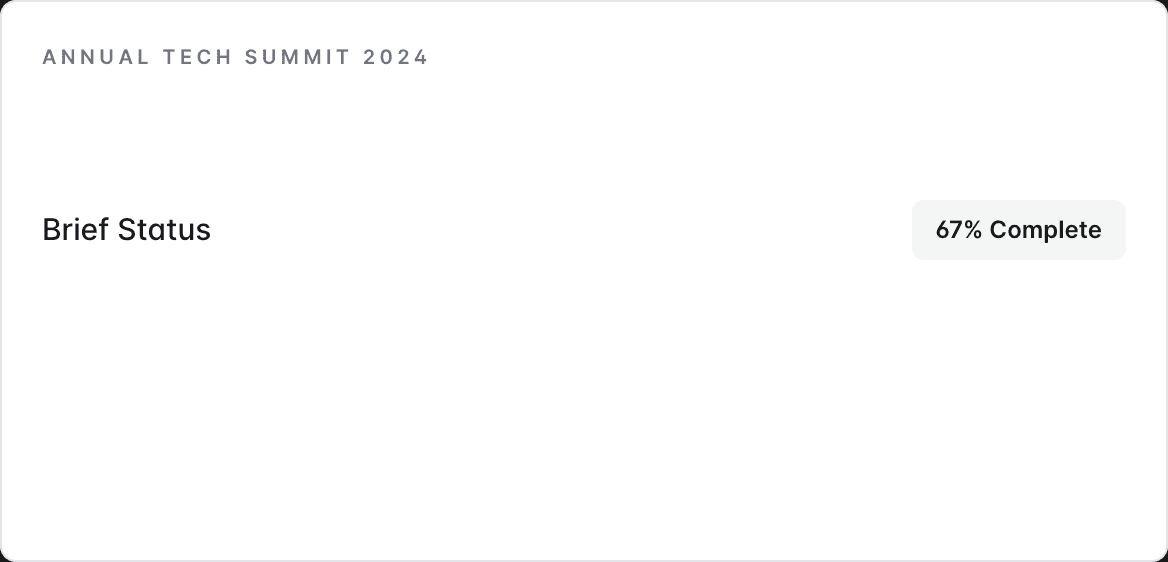
A number tells you nothing. A checklist tells you what to fix.
Version B · chosen
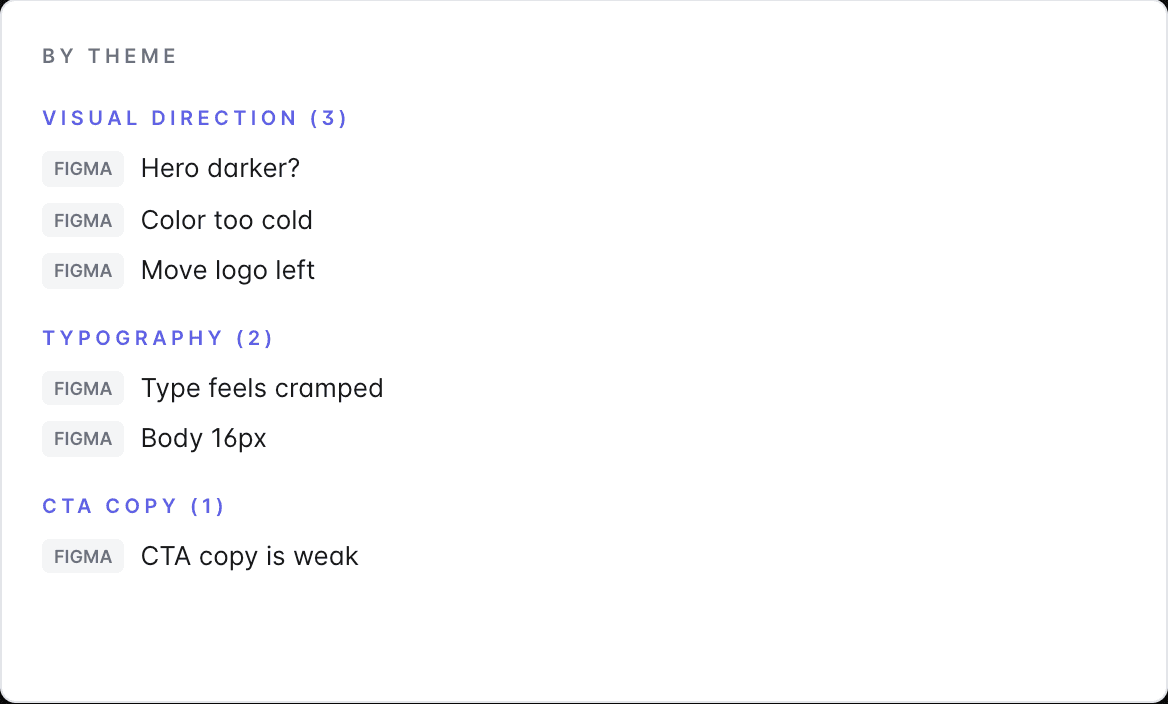
Exploration 02 · Feedback Consolidation
Version A
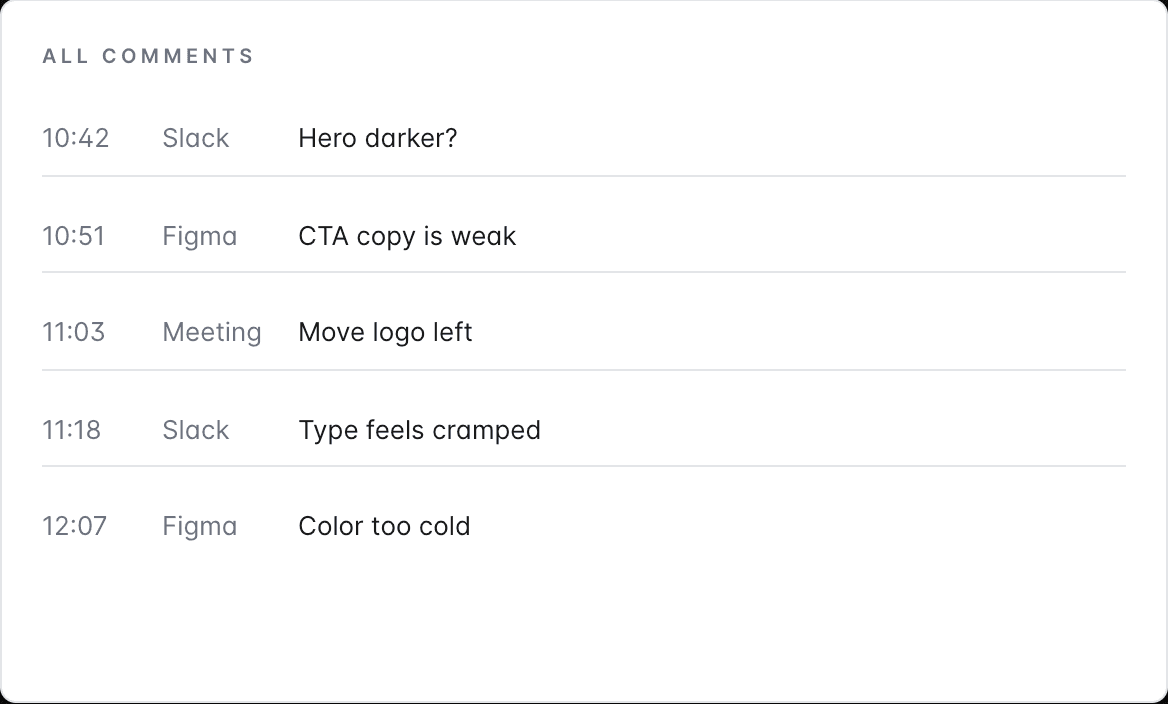
Chronological order tells you when. Grouped tells you what matters.
Version B · chosen
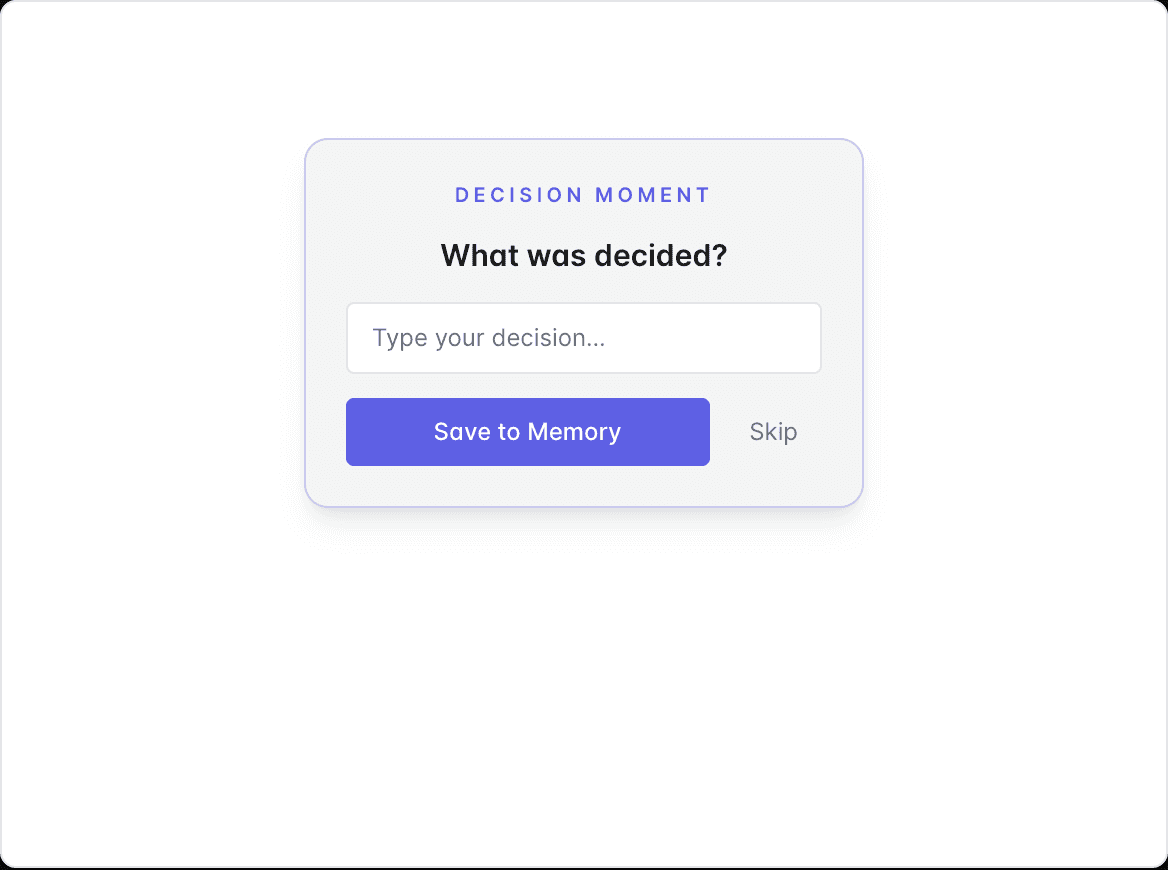
Exploration 03 · Decision Capture
Version A
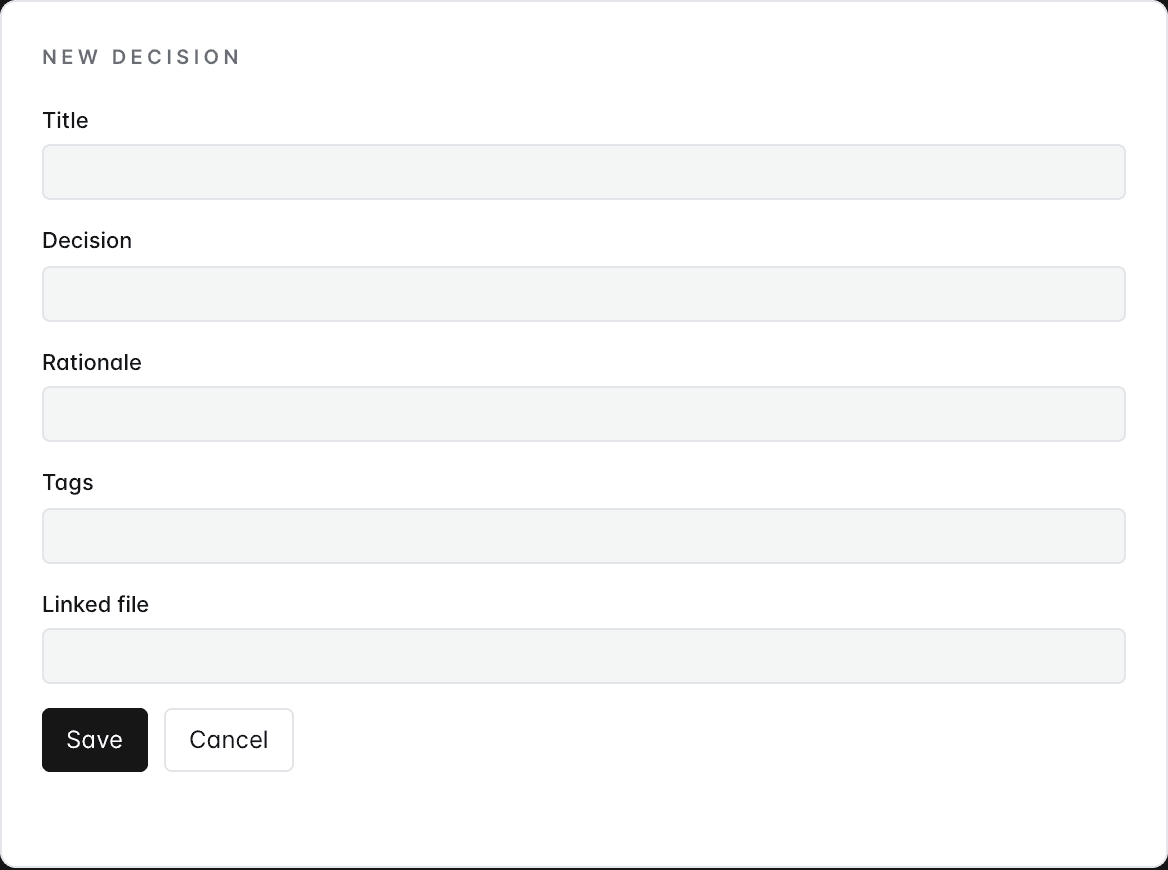
A form is homework. A prompt is a conversation.
Version B · chosen
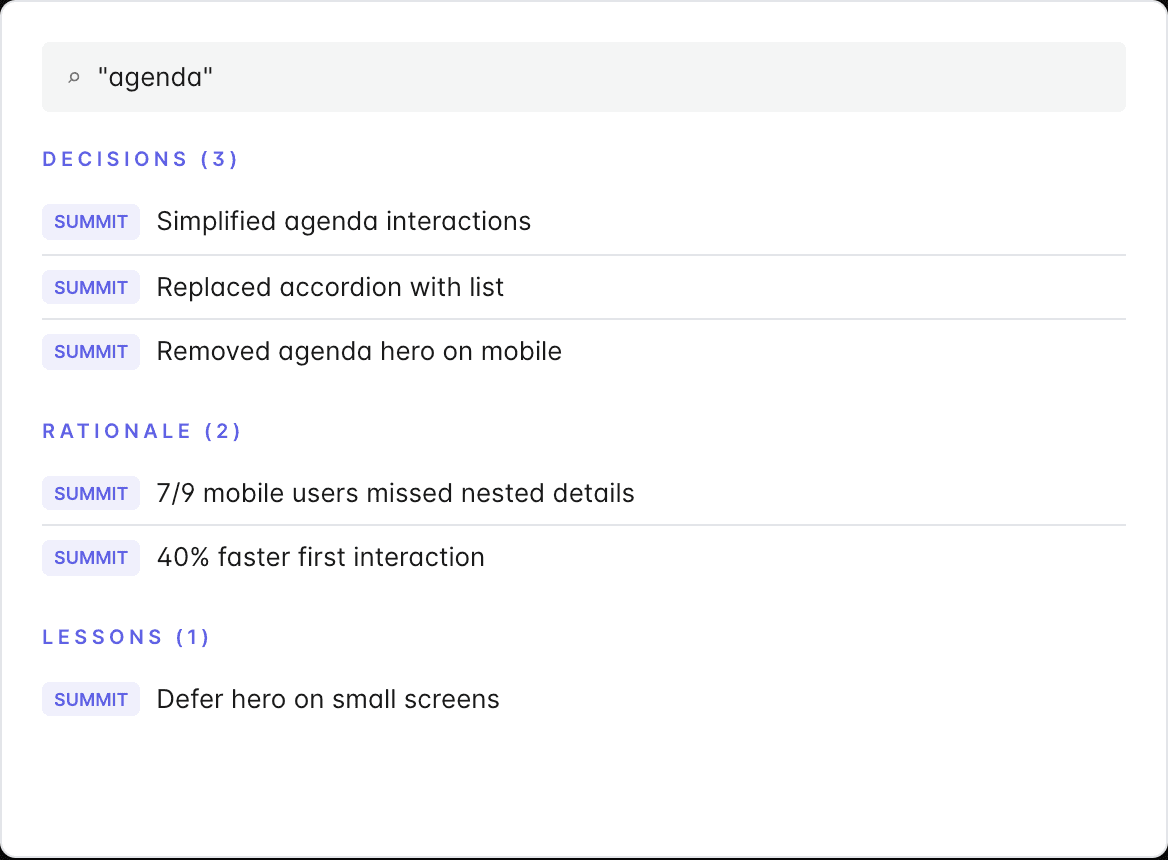
Exploration 04 · Memory Search
Version A
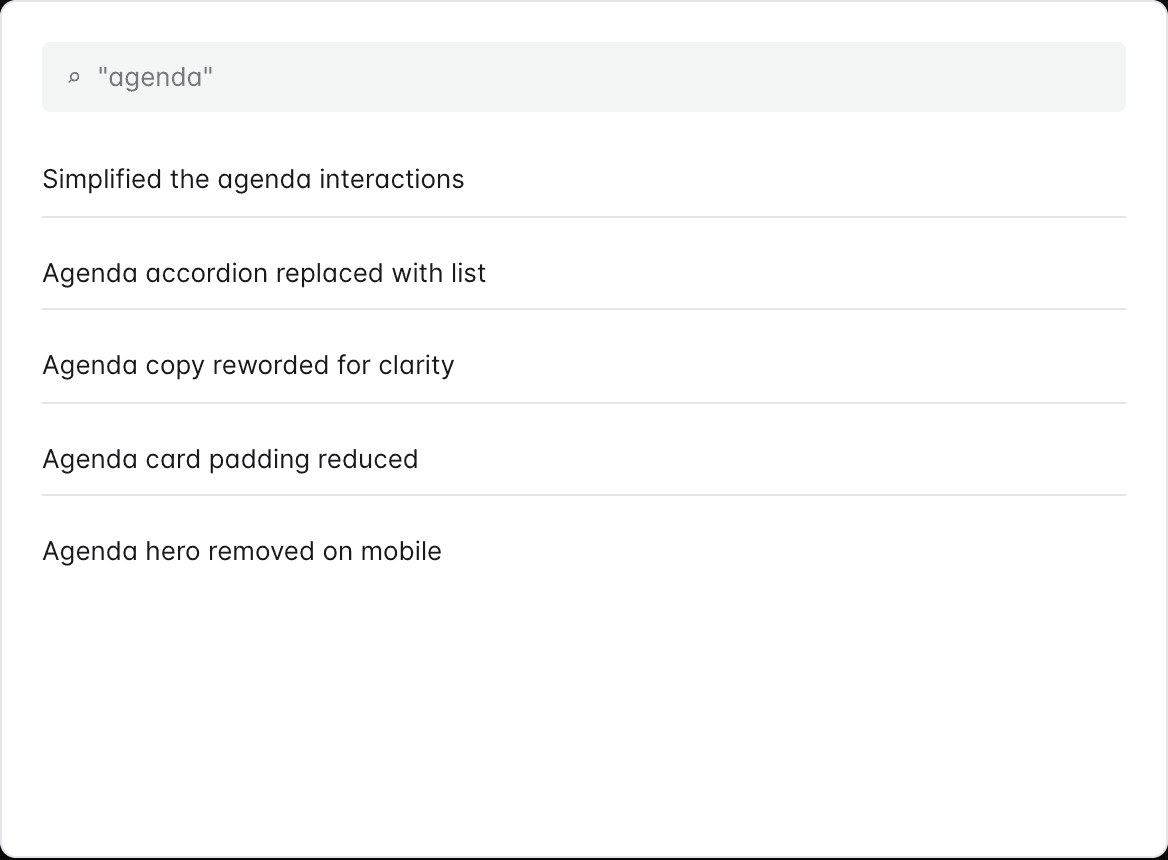
Search returned results. Grouping returned understanding.
Version B · chosen
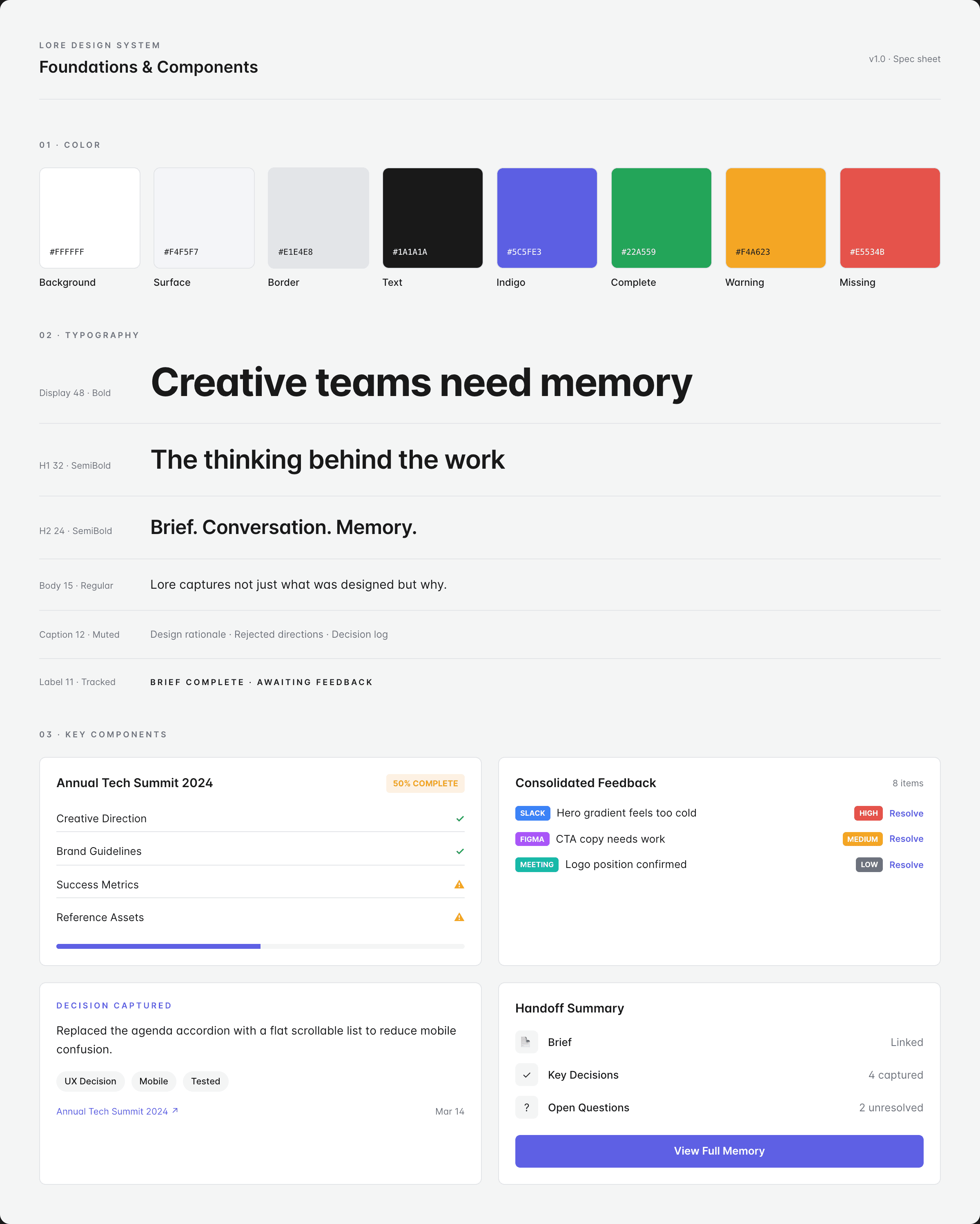
DESIGN SYSTEM
The visual language.
Every visual decision in Lore was tested against one question: does this feel like it was built for creative people, or for engineers?
THE SOLUTION
Lore. Brief it. Shape it. Remember it.
Three layers. Every project has a Brief, a Conversation, and a Memory.
The brief that starts the work. The conversation that shapes it. The memory that explains it. Each layer connects to the others, so nothing disappears between projects, handoffs, or team changes.
Here is what that looks like.
Screen 01 · Dashboard
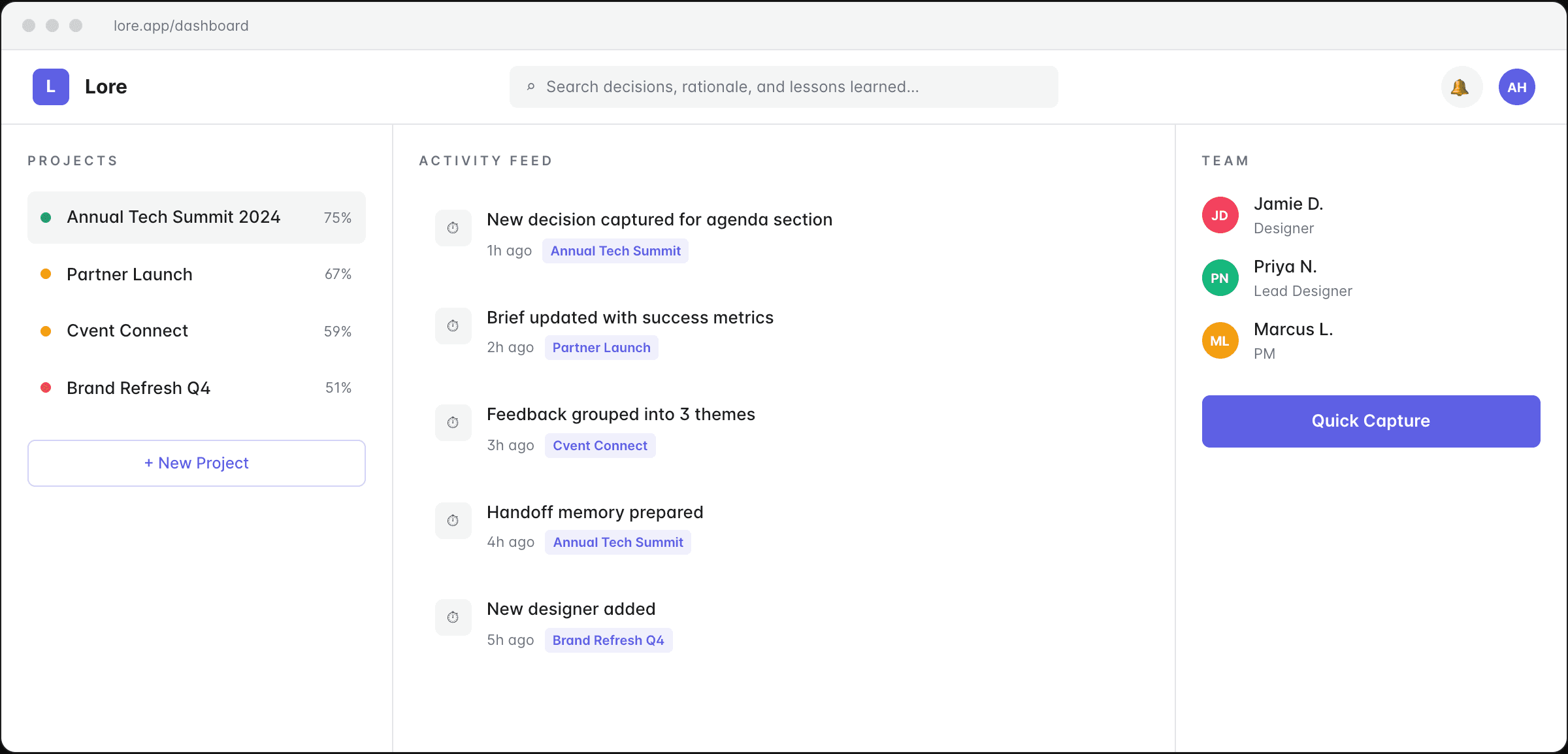
Every active project, its status, recent decisions, and team activity. One place.
Screen 02 · Brief layer
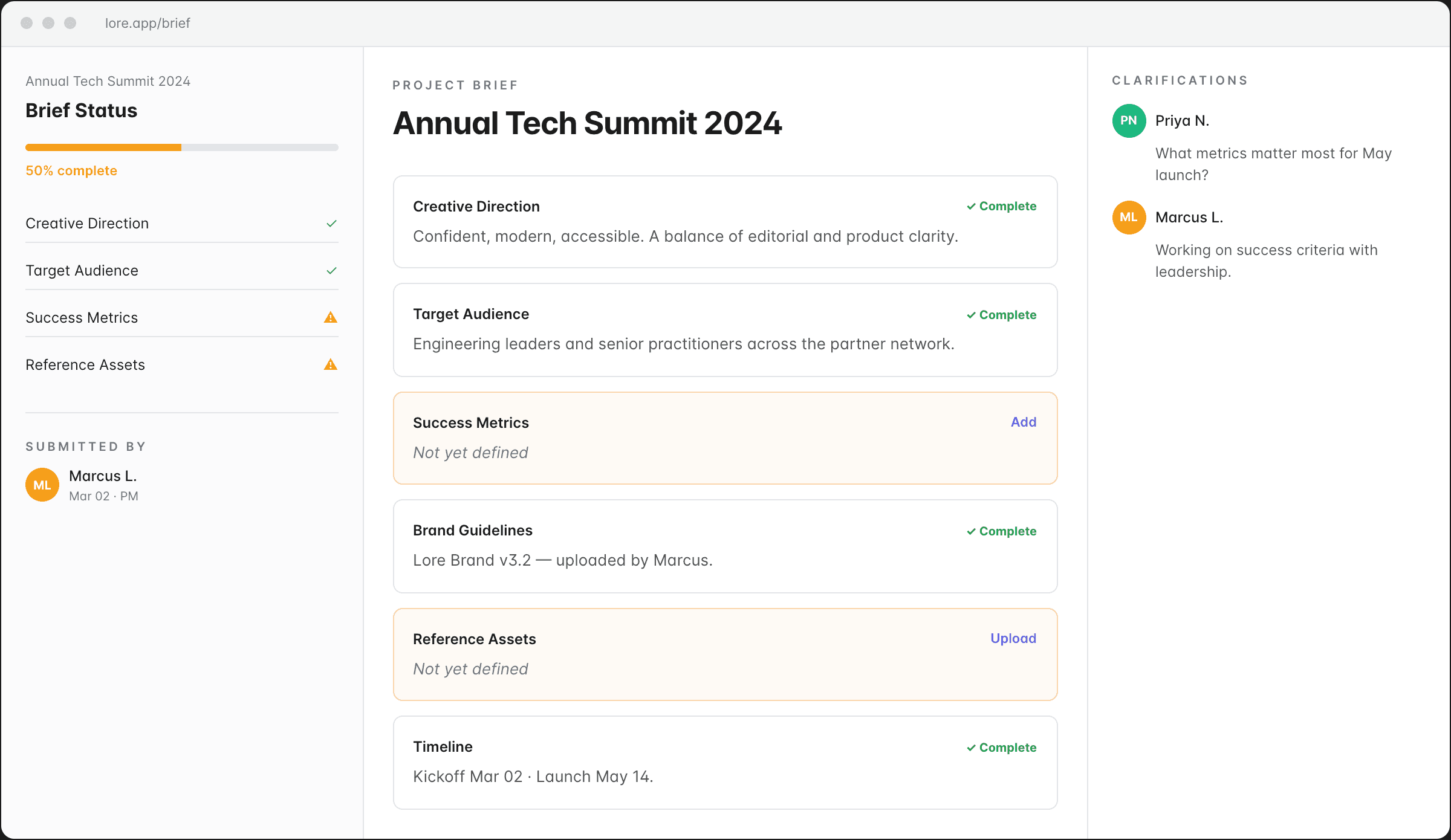
Everything needed to start work confidently. A clear signal when something is missing.
Screen 03 · Conversation layer
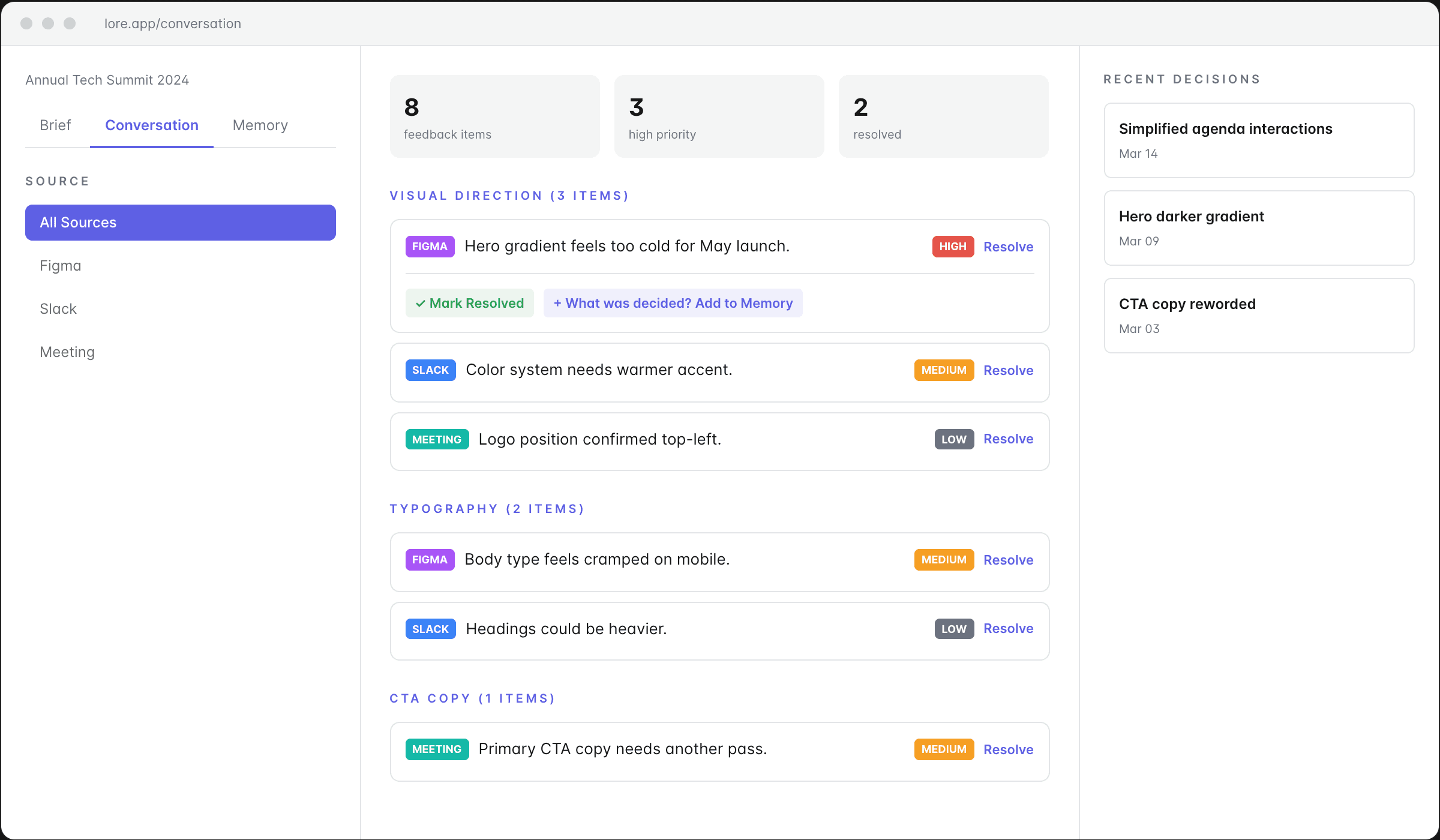
The Conversation layer. Feedback from Figma, Slack, and meetings consolidated into one view, grouped by theme, prioritized by impact, and connected directly to the decisions they informed.
Screen 04 · Memory layer
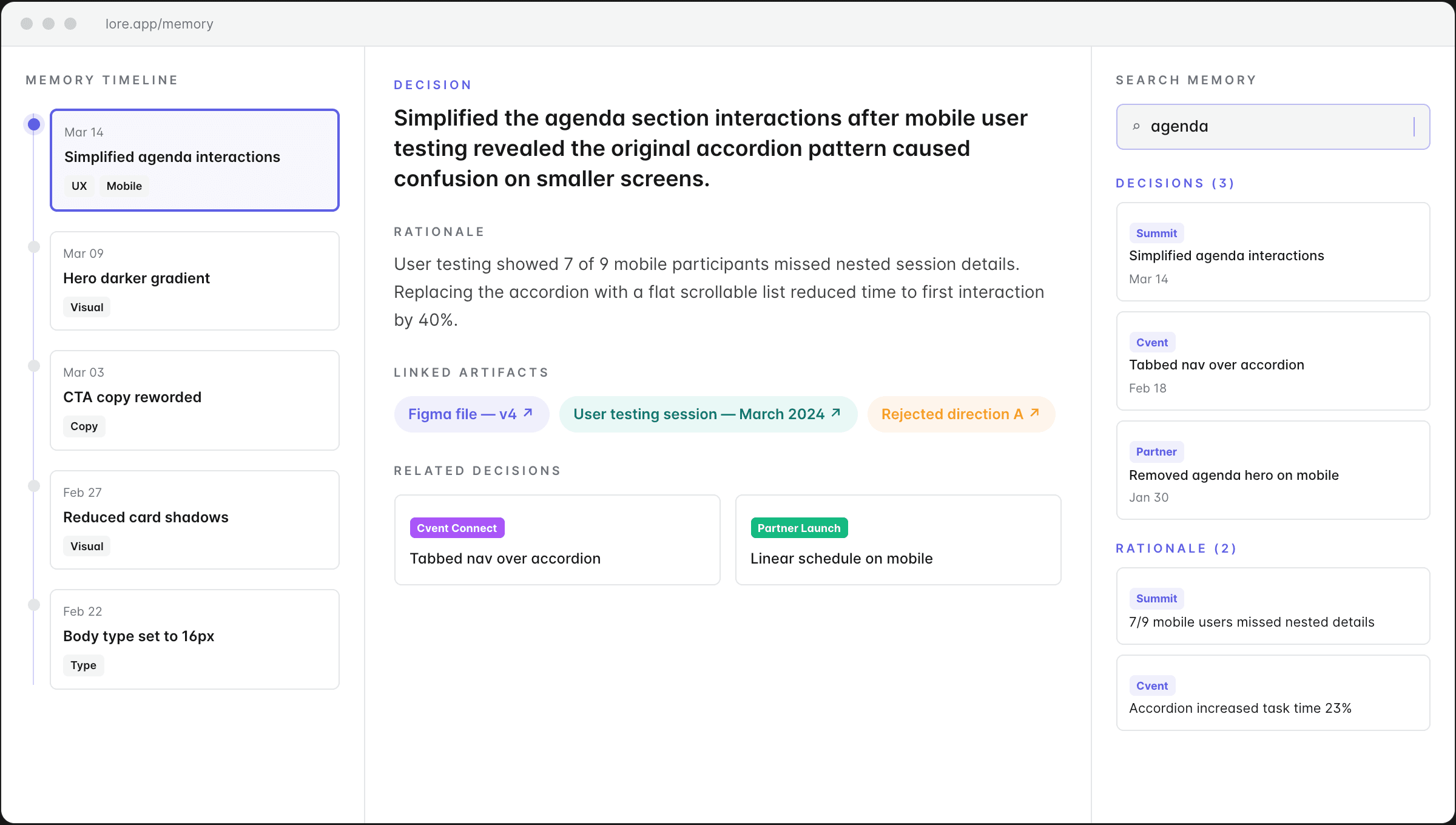
The Memory layer, the feature that makes Lore different from everything else. Every decision, its rationale, and why it was made. Searchable across every project. Permanently. No tool does this today.
Screen 05 · Handoff view
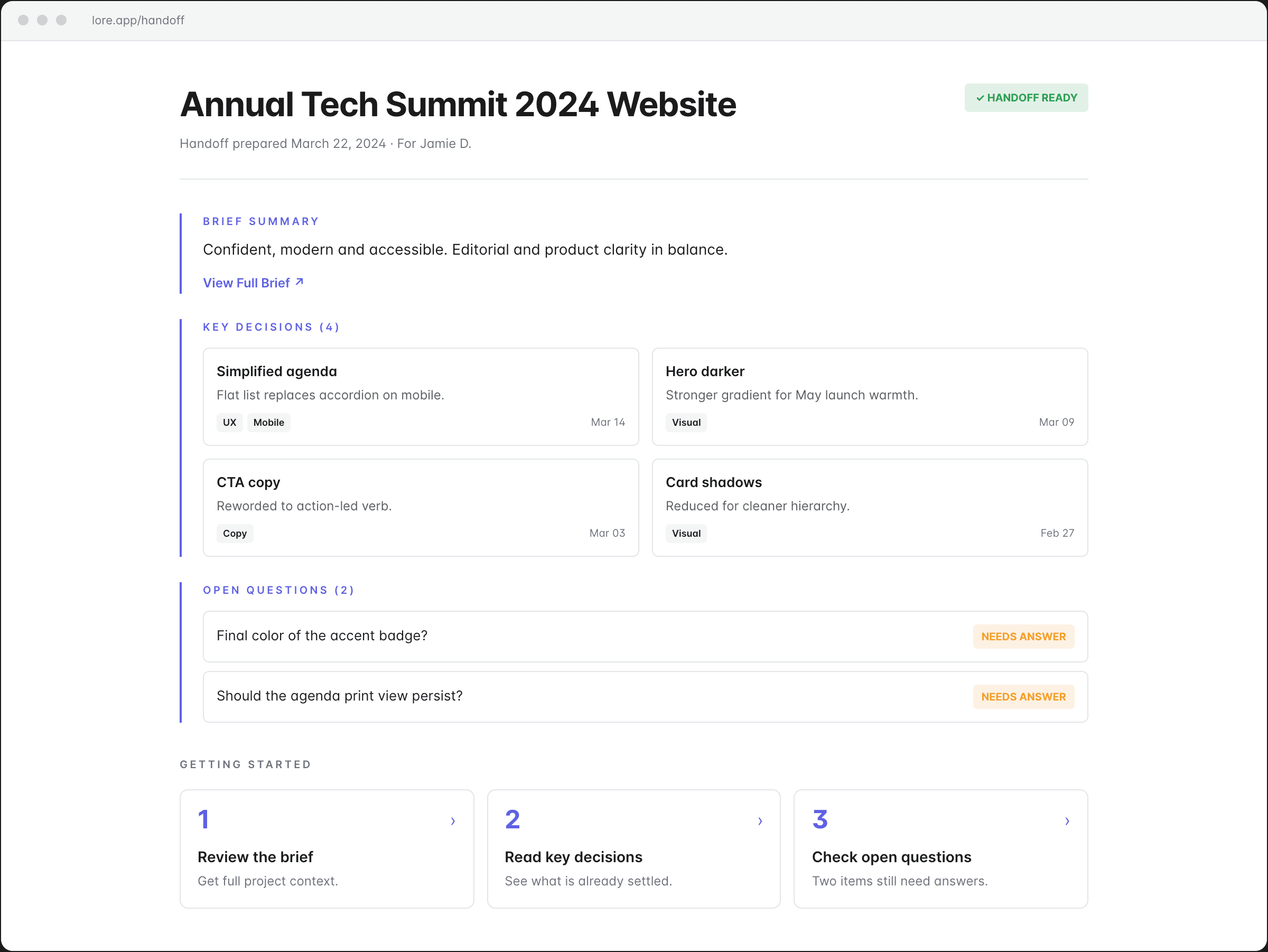
Everything a new designer needs. Without reverse engineering a single file.
PROJECTED IMPACT
What changes when creative teams stop losing their thinking.
Concept project. Projections based on real workflow experiences at Cvent and Macquarie.
But based on what I documented from real creative teams, here is what changes when the tool understands the work.
0
Briefs that start without context
The Brief layer shows exactly what is missing.
1
Place for all feedback
Consolidated from every source.
Forever
Design decisions preserved
Every rationale. Permanently searchable.
LOOKING BACK
What this taught me.
The problem was never workflow management. Every tool I looked at handled tasks fine. The gap was the invisible layer of thinking that disappears when a project ends.
Making something worth capturing requires making capture feel effortless. If documenting a decision takes longer than making it, nobody will do it. One sentence at the moment a decision is made, that was the only honest answer.
If I were taking this further, I would make Memory predictive. Not just searchable. Proactively surfacing decisions when a designer starts something similar. That is when institutional knowledge becomes genuinely useful rather than just preserved.
The deeper lesson was about where friction actually lives in creative work. It is rarely in the doing. It is almost always in the remembering, the context that gets lost, the decisions that have to be remade, the thinking that disappears between the moment it happens and the moment someone needs it. Lore is an attempt to close that gap.